
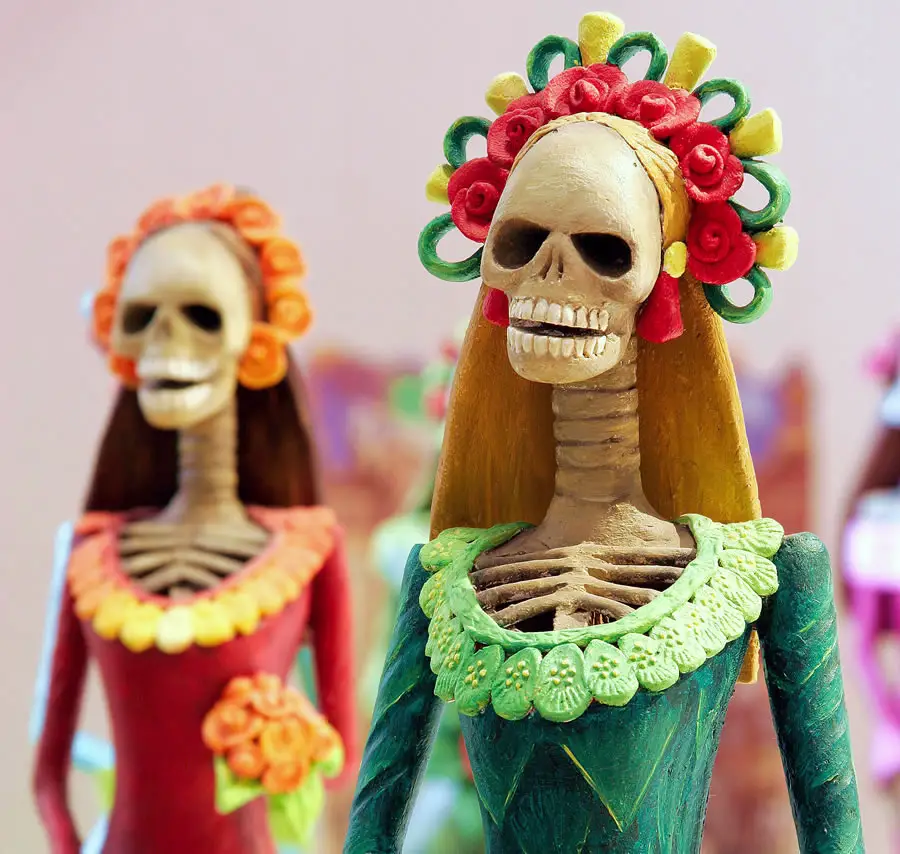
La Calavera Catrina (Elegant Skull) is a 1910–1913 zinc etching by the Mexican printmaker, cartoon illustrator and lithographer José Guadalupe Posada. La Catrina has become an icon of the Mexican Día de Muertos, or Day of the Dead.
The Mexican Revolution gave birth to La Catrina, an image created by the talented engraver Jose Guadalupe Posada that satirized the government, the governing, and the ruling class. The original name for “La Catrina” was actually La Calavera Garbancera, a name that the working class and poor used to refer to Mexicans who held their native heritage in contempt and made every attempt to pass as Europeans. The skeletal resemblance came from the propensity to wear very pale makeup, in an effort to whiten the skin. Posada’s creation was the simple head shot with an ornate aristocratic French hat. Credit for changing her name is given to Diego Rivera, who took the hat-adorned head of Garbancera and gave her a full body, completely dressed in elegant clothing.
Her debut can be seen today in Mexico City on the preserved mural Sueño de una tarde dominical en la Alameda Central (“Dream of a Sunday Afternoon in Alameda Park”) at the Museo Mural Diego Rivera. This revered display of Rivera’s art is laden with much symbolism, innuendo and legend.
La Catrina has always represented the disparity between the classes of Mexico and as much as there are those who claim things have changed, the reverence to this symbol only succeeds to point out how things have truly remained the same. Before the revolution, the rich enjoyed many privileges completely unavailable to those with less money. Though there is much more visibility of the lower classes in current times, poverty is still a huge political issue and daily wages remain at amazingly low levels.
Source: Banderas News
FAQ
- What is the safest part of Puerto Vallarta to stay in?
The Marina and the Romantic Zone are considered some of the safest areas to stay in Puerto Vallarta. Both areas are popular among tourists and offer a variety of accommodations, restaurants, and attractions. The Marina is known for its upscale atmosphere, luxury resorts, and high-end shops and restaurants. It has a very secure, controlled environment with 24/7 security personnel. The Romantic Zone offers a more authentic Mexican experience with cobblestone streets, colorful colonial buildings, and a vibrant mix of galleries, cafes, and bars. As a central tourist area, it also has a strong police presence and is considered very safe.
- Where do locals go in Puerto Vallarta?
Locals in Puerto Vallarta enjoy spending time at the city’s beautiful beaches, scenic parks, and lively local markets. Popular beach spots include Playa de Oro, Playa Las Animas, and Playa Camarones for their soft sand and calm waters. Many locals visit the Vallarta Botanical Gardens to enjoy the lush vegetation and hiking trails. They also frequent authentic local food venues like Birrieria las 3 Regiones taco stand, cafes like Cafecito Vallarta, and neighborhood bars like La Cerveceria Union. The downtown Lazaro Cardenas market is a favorite for produce, spices, crafts.
- Is Downtown Puerto Vallarta nice?
Yes, downtown Puerto Vallarta is an exceptionally nice and popular area, celebrated for its vibrant mix of historic Mexican charm and a lively beach town atmosphere. It features a picturesque historic center with cobblestone streets, colorful buildings, and the iconic Parish of Our Lady of Guadalupe church. The downtown seamlessly blends into the scenic Malecón, a beautiful oceanfront boardwalk lined with fascinating sculptures, shops, and restaurants, making it perfect for strolling and enjoying the stunning ocean views.
The area offers an excellent variety of dining, from upscale restaurants to authentic street food, along with fantastic shopping in boutiques and art galleries. Adjacent to the main center is the popular Zona Romántica (Romantic Zone), known for its trendy vibe and energetic nightlife. The entire downtown is considered safe and is very walkable, allowing visitors to easily explore its captivating blend of culture, cuisine, and coastal beauty on foot.
Tip: For an unforgettable experience, head down to the Malecón or any beachfront spot about 30 minutes before the scheduled sundown to watch the spectacular sunset over the bay.
- What is considered old town in Puerto Vallarta?
Old Town, also known as the Romantic Zone or Zona Romántica, is considered the historic heart of Puerto Vallarta. It is characterized by its picturesque cobblestone streets, classic whitewashed buildings, red-tiled roofs, and a lively mix of shops, galleries, restaurants and bars. Nestled between the Sierra Madre mountains and Banderas Bay, Old Town has a traditional Mexican village charm with its colonial architecture and slower pace compared to the rest of Puerto Vallarta. Its romantic ambience comes from the area’s natural beauty, outdoor cafes, and charming boutique hotels. Old Town offers visitors a taste of an authentic Mexican neighborhood.

Book tours & support us
- Best prices
- 100% Local Support
- 2 decades+ of experience in Puerto Vallarta

Puerto Vallarta news, tips & content
- New info every two weeks
- Free content, news, videos
- Unsubscribe at any time

Contact us via WhatsApp
- Talk with our reservations expert
- Real local and human support
- Book tours, hotels, transfers, and more.
Share this article, choose your favorite option!




j’aimerais savoir ,pour 2025 a quelle date seras installé et enlevé la merveilleuse Catrina sur la Maleon.
Still no news about that, if we hear something we’ll publish it in the news section.
Greetings