Origin & Destination (2011) Pedro Tello – Chimera
Summary
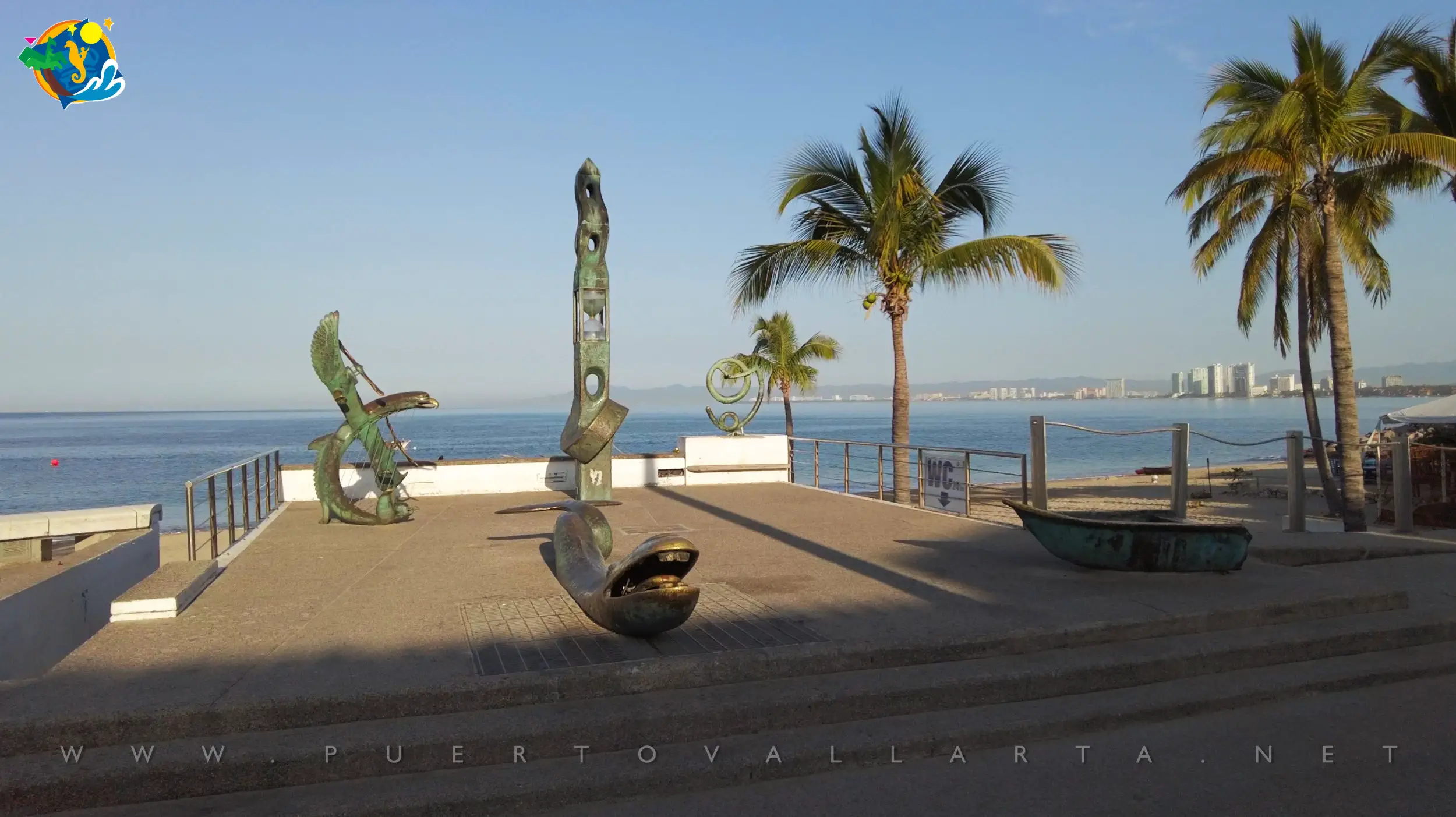
- “Origin and Destination” is a group of five sculptures created by Pedro Torres Tello.
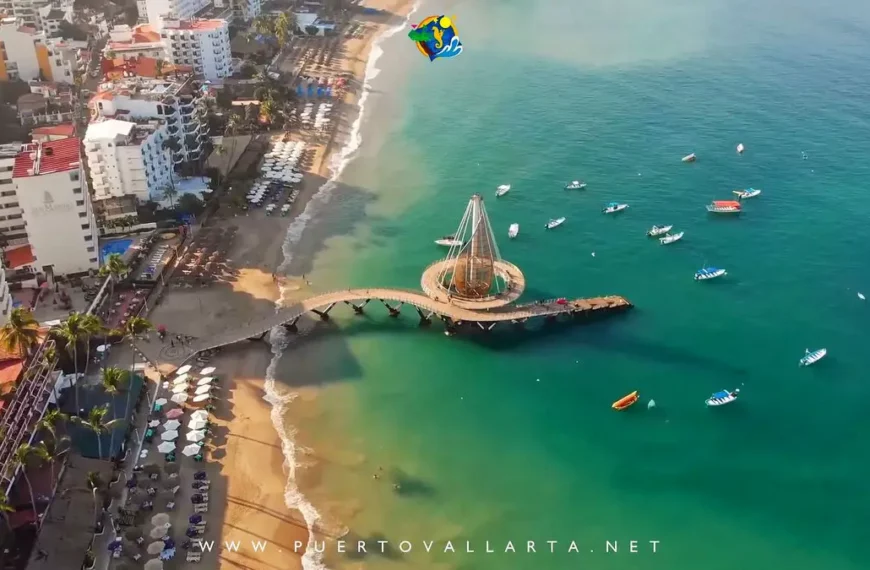
- The sculptures are located along Puerto Vallarta’s Malecón, a seaside promenade and boardwalk.
- The installation represents the beginnings of humanity, with each sculpture symbolizing a different aspect of human history.
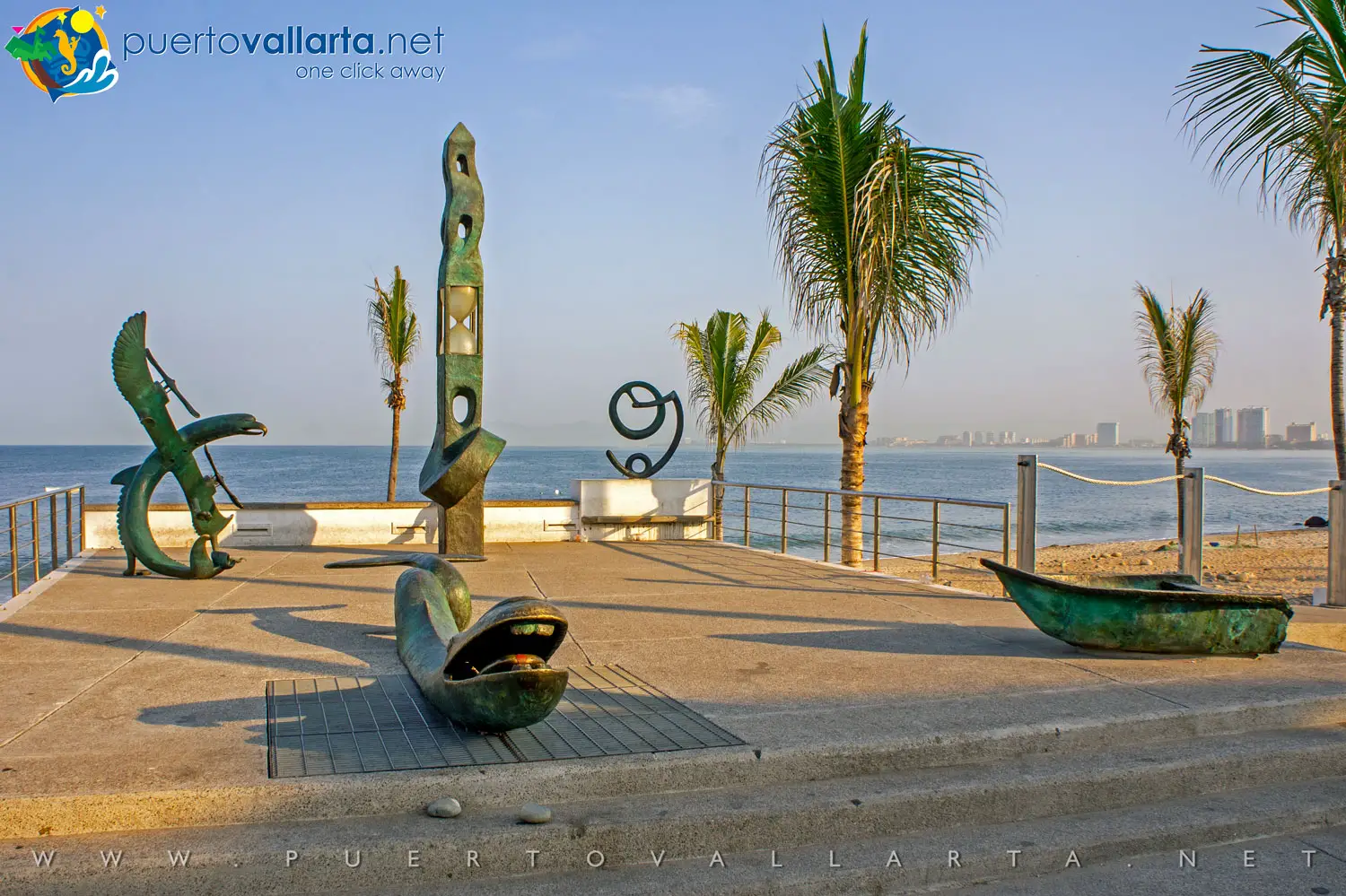
- The boat sculpture represents humanity’s search for new horizons.
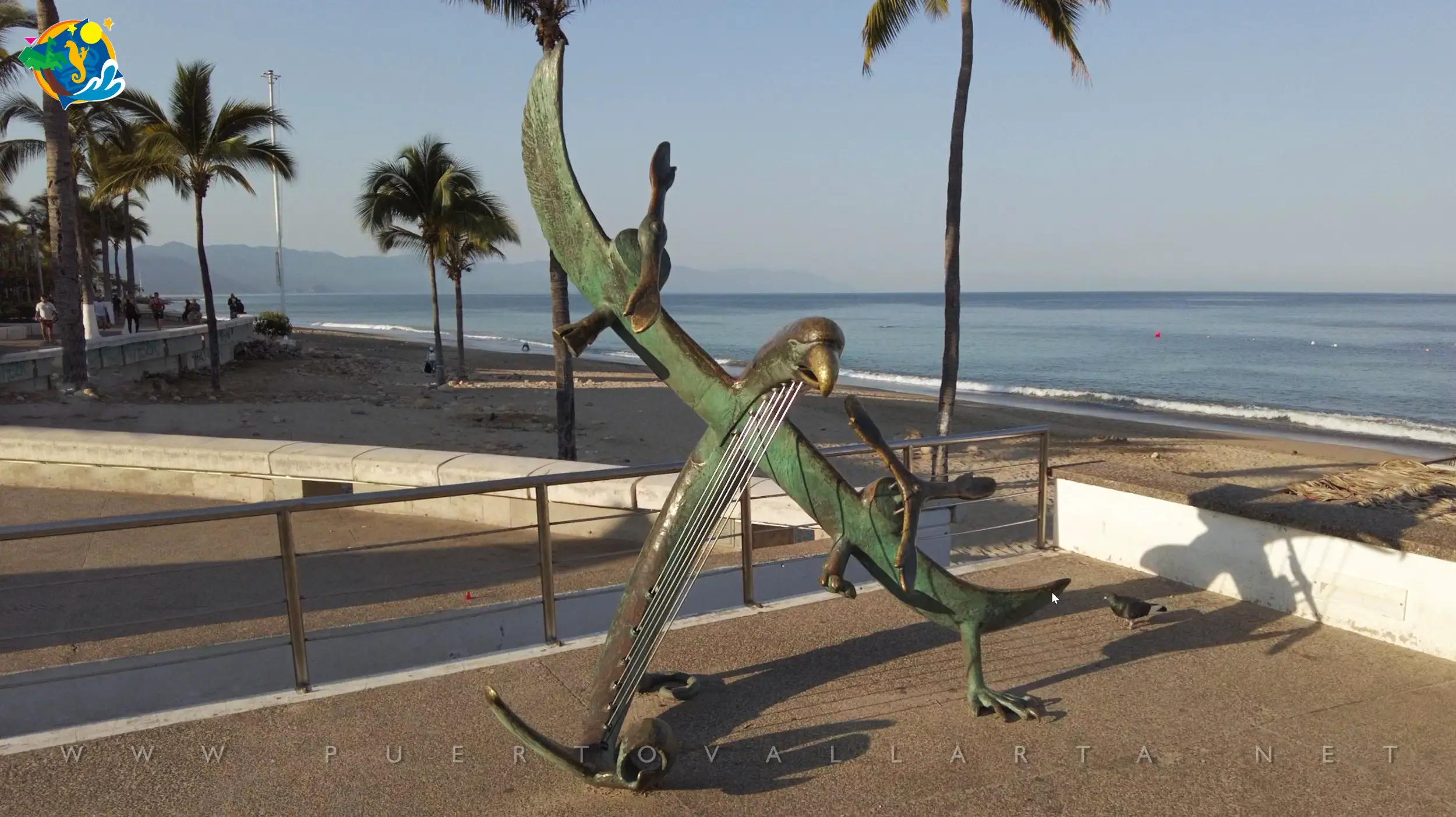
- The chimera sculpture depicts the rise of machines.
- The whale sculpture shows the rise of humanity in the new millennium. The wheel symbolizes humanity’s technology and science.
- The obelisk sculpture represents humanity’s spirituality.


Introduction
Origin & Destination (2011) Pedro Tello – Chimera
At last! That’s what Pedro Tello must have said when his project “Origin and Destiny” finally became a reality on the Malecon in December 2011.
A group of sculptures that are born out of the concept of time, the new millennium, humans and time and its relationship with history, what we’ve done in all that time and the dreams we try to make a reality.
This project took 13 years from start to finish, originally 8 pieces that included a boat, a horse, a chimera, a dancer, a whale, a musician, a wheel and an obelisk, that was planned as a celebration of the new millennium, as The Millennia statue.
Inspiration
Origin & Destination (2011) Pedro Tello – Puerto Vallarta Malecon, shot in 2018
In the words of the artist:
“There where time has completely erased our origins, that is the start of our history, where tools were completely absent and intelligence was only that, there was a complete lack of control of the elements, then the day comes when sailing is discovered, either by intuition or chance, humans start their development, sailing in his ship of dreams and realities in the ocean of time, unstoppable and wild.”
360 image
That’s the start of this group of sculptures. A few details that explain the different elements of each individual piece:
- As mentioned above, the boat represents mankind’s quest for new horizons.
- A chimera symbolizes humans’ gradual replacement of animals with machines.
- The whale represents the new period humans enjoy while sailing along the seas of science and technological development.
- The wheel symbolizes humanity’s technology and science.
- The final sculpture is an obelisk, representing humanity’s spirituality. The obelisk contains an hourglass filled with sand, a symbol of the transience of the present moment and life.
Location
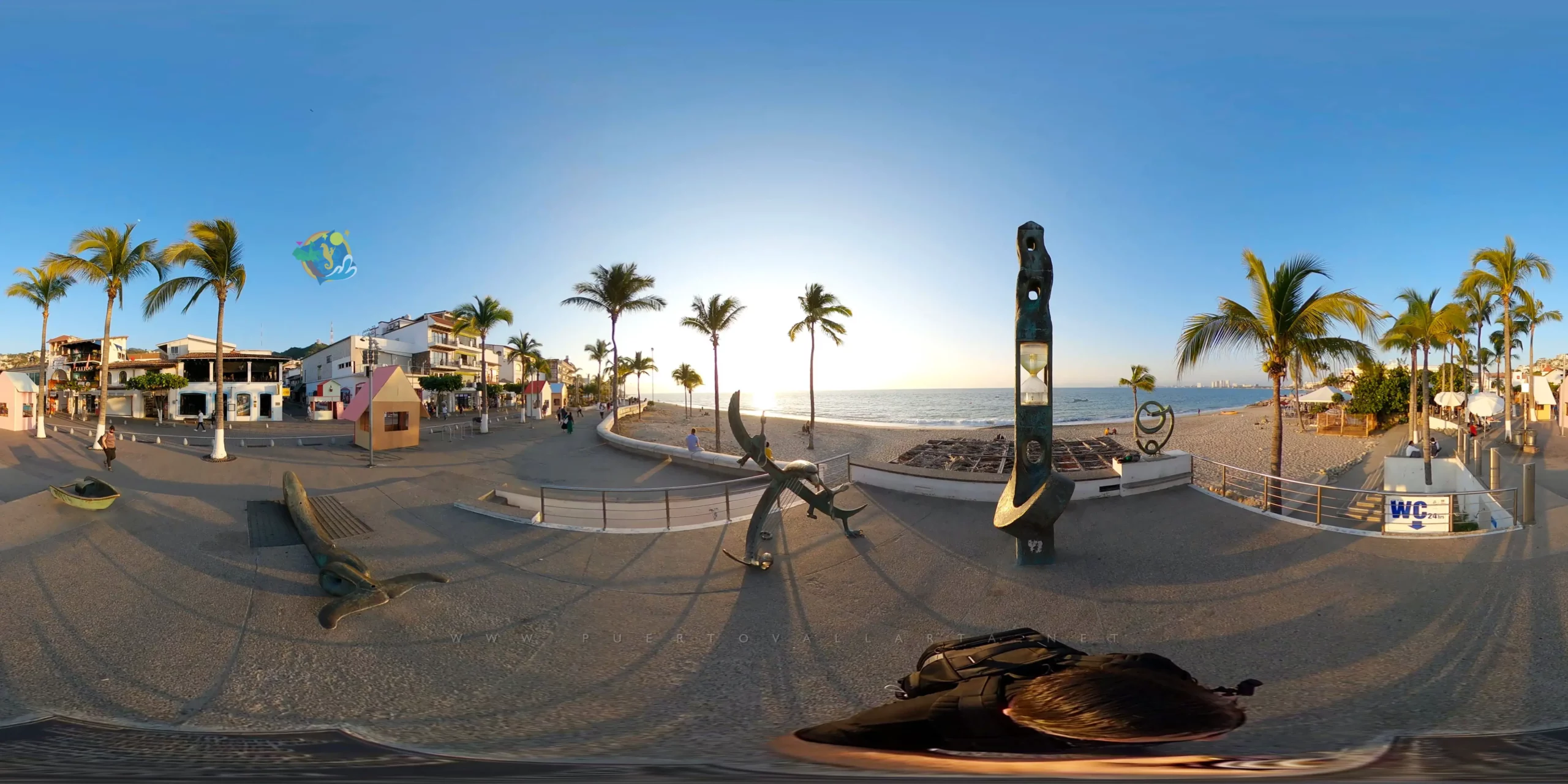
You’ll find this group of 5 pieces on the corner of Allende Street and the Malecon/boardwalk in Downtown Puerto Vallarta. The Millennia sculpture is located north of it and Nostalgia to the south.
About the artist
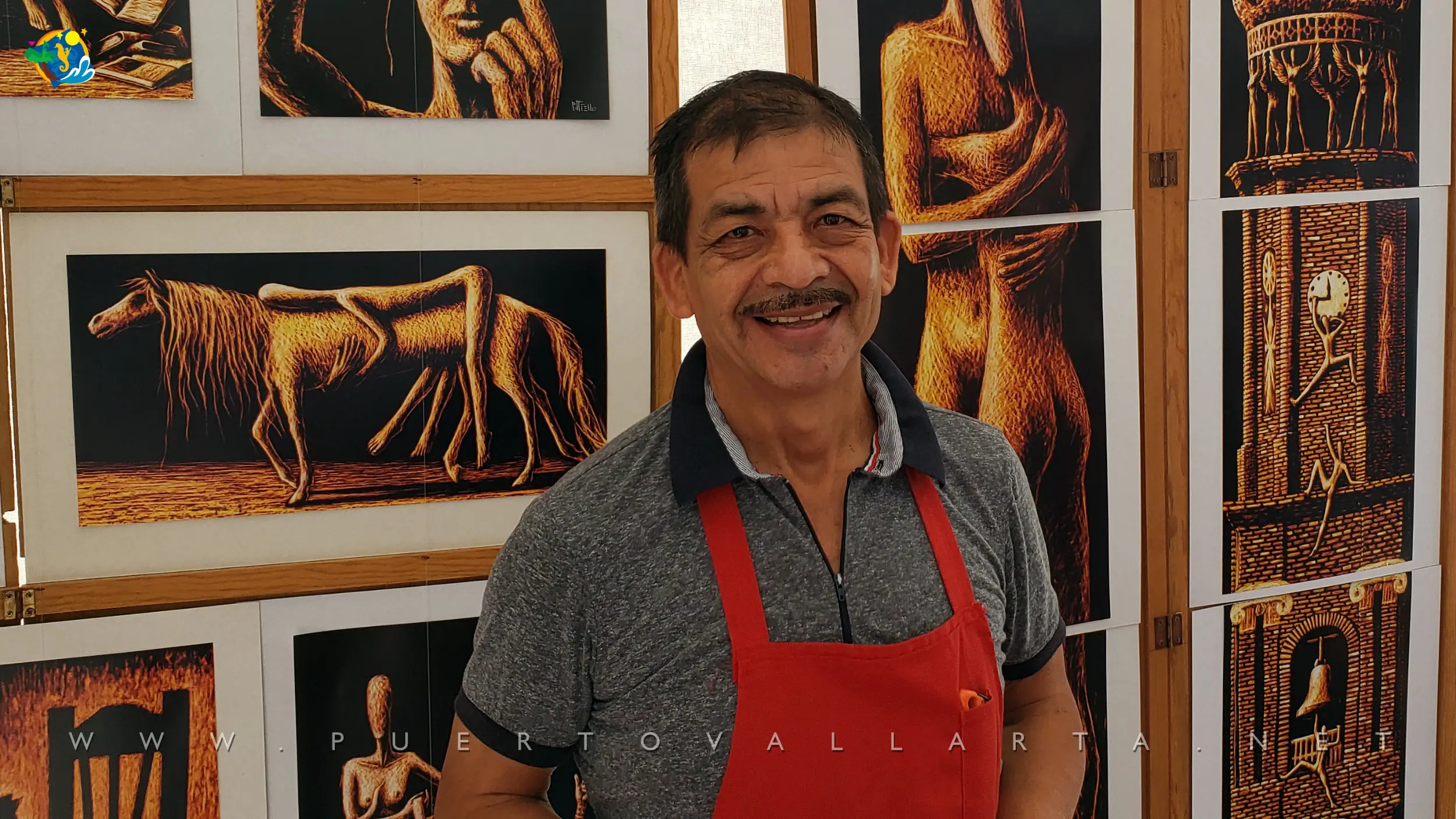
Self-taught artist, Pedro Torres Tello was born in San José del Mosco, in the Sierra Madre Mountains near Mascota in the state of Jalisco in 1962.
He has lived in Puerto Vallarta for over 35 years. Pedro Tello has dabbled with painting, printing, photography, and sculpture with success. To many people’s surprise, he documented the existence of otters in the Cuale River using photographs as proof.
He has recently developed a new technique of engraving on photographic paper, making strokes with a pointed curved knife and providing shades ranging from black, ocher, gold, and vermilion to white and colours, which he refers to as “tellographies”, Tellografía artwork (background on his photo above) on the Olas Altas Farmer’s Market and under the western bridge of the Cuale River Island (below Morelos street) every afternoon from 4 to 9 pm.
Author: M. A. Gallardo
FAQ

Book tours & support us
- Best prices
- 100% Local Support
- 2 decades+ of experience in Puerto Vallarta
Puerto Vallarta news, tips & content
- New info every two weeks
- Free content, news, videos
- Unsubscribe at any time
Contact us via WhatsApp
- Talk with our reservations expert
- Real local and human support
- Book tours, hotels, transfers, and more.
Share this article, choose your favorite option!