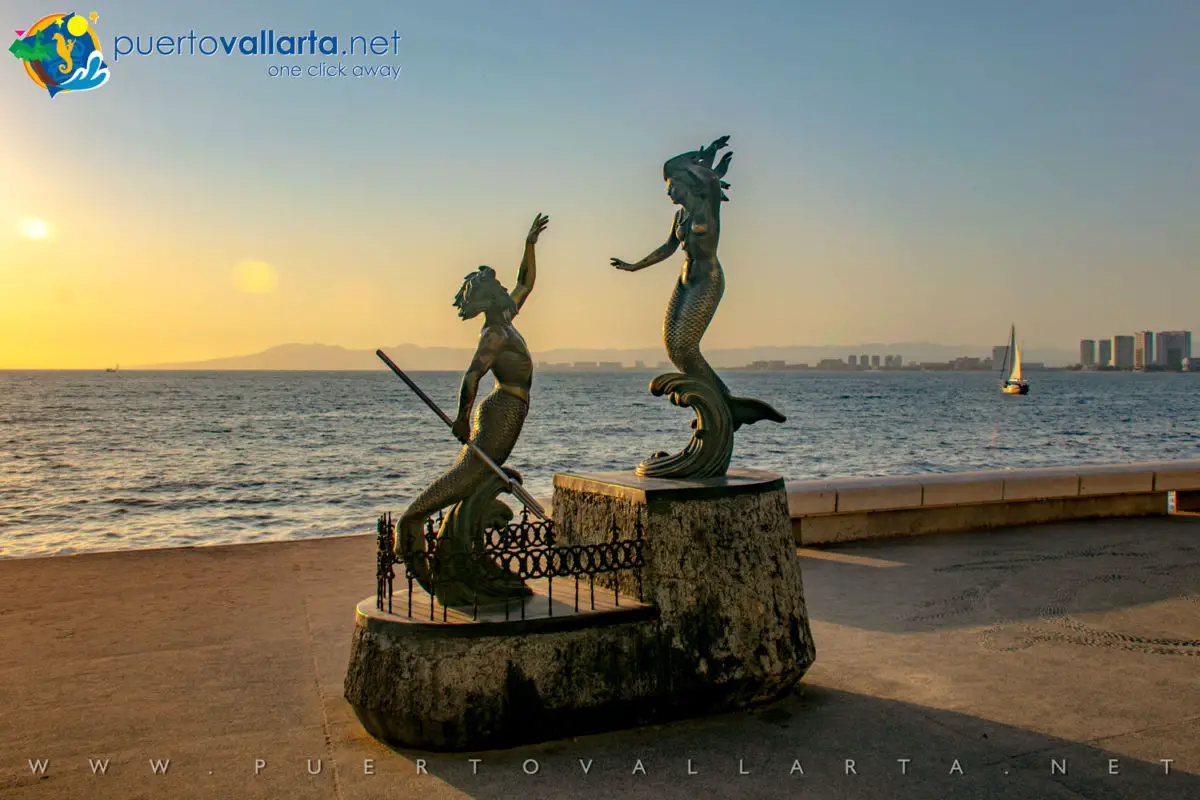
Triton and Siren by Carlos Espino (1990)
Summary
- Triton and Siren is a bronze sculpture created by Carlos Eugenio Espino Del Castillo Barrón in 1990, located along Puerto Vallarta’s waterfront boardwalk.
- The sculpture depicts Triton, a Greek god of the sea, holding a trident and a mermaid, representing a siren.
- The sculpture is a beautiful representation of the mythological creatures and adds to the artistic and cultural atmosphere of Puerto Vallarta.
- Triton and Siren is a popular attraction for tourists and locals alike, and is a must-see for art enthusiasts visiting the area.


Introduction
A well-known, classical style sculpture on the Puerto Vallarta Malecon, until recently found in front of Mandala (Malecon and Abasolo), in the past in the location of the Subtle Rock Eater sculpture was located. March 2019 it has been moved back to its XX Century location on Morelos and Mina streets, which is some 40 yards from the Seahorse statue.
(Also found under the erroneous names: “Neptune and the Nereid”, “Triton and the Nereid”, “Triton and Mermaid” or “Poseidon and the Nereid”).
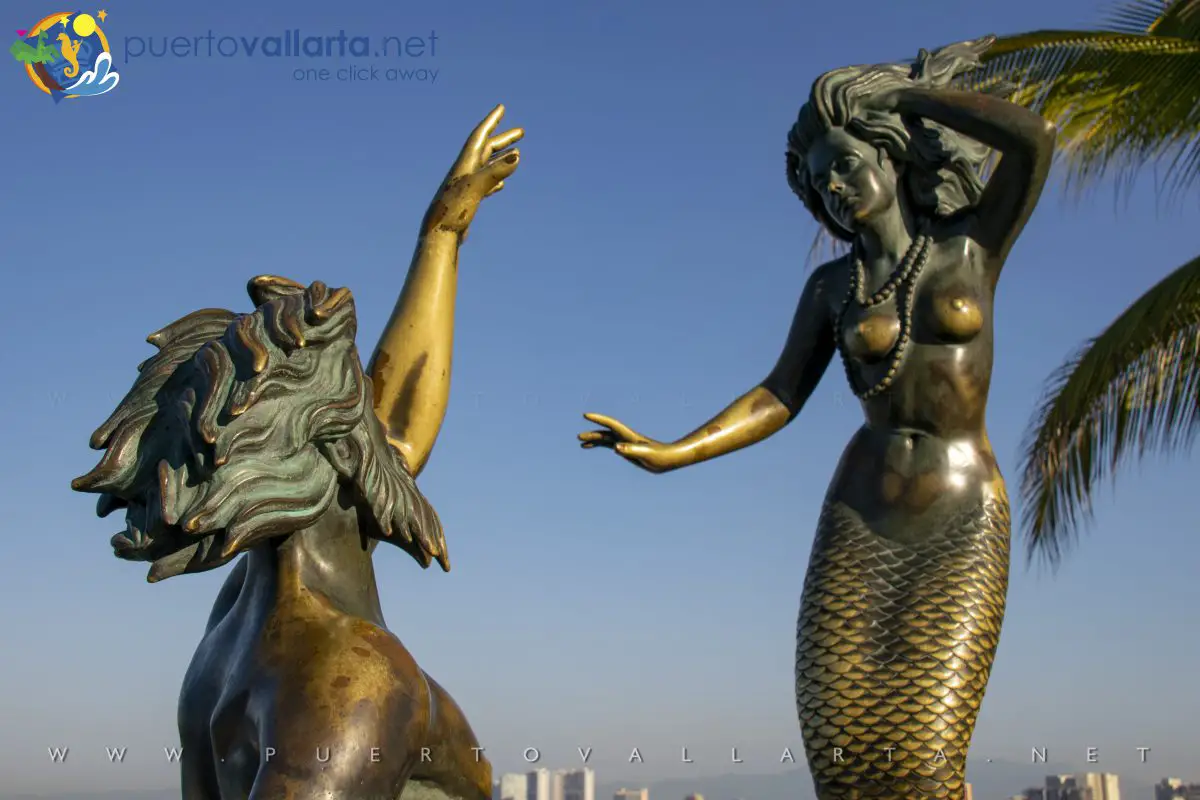
Detail of Siren from “Triton and Siren” on the Malecon
About the sculpture
This bronze sculpture was created by sculptor Carlos Espino (born in Mexico City, May 3rd, 1953), where he concentrates on the human form and classical mythology, which can clearly be appreciated in this piece. It was unveiled on the Malecon in August of 1990.
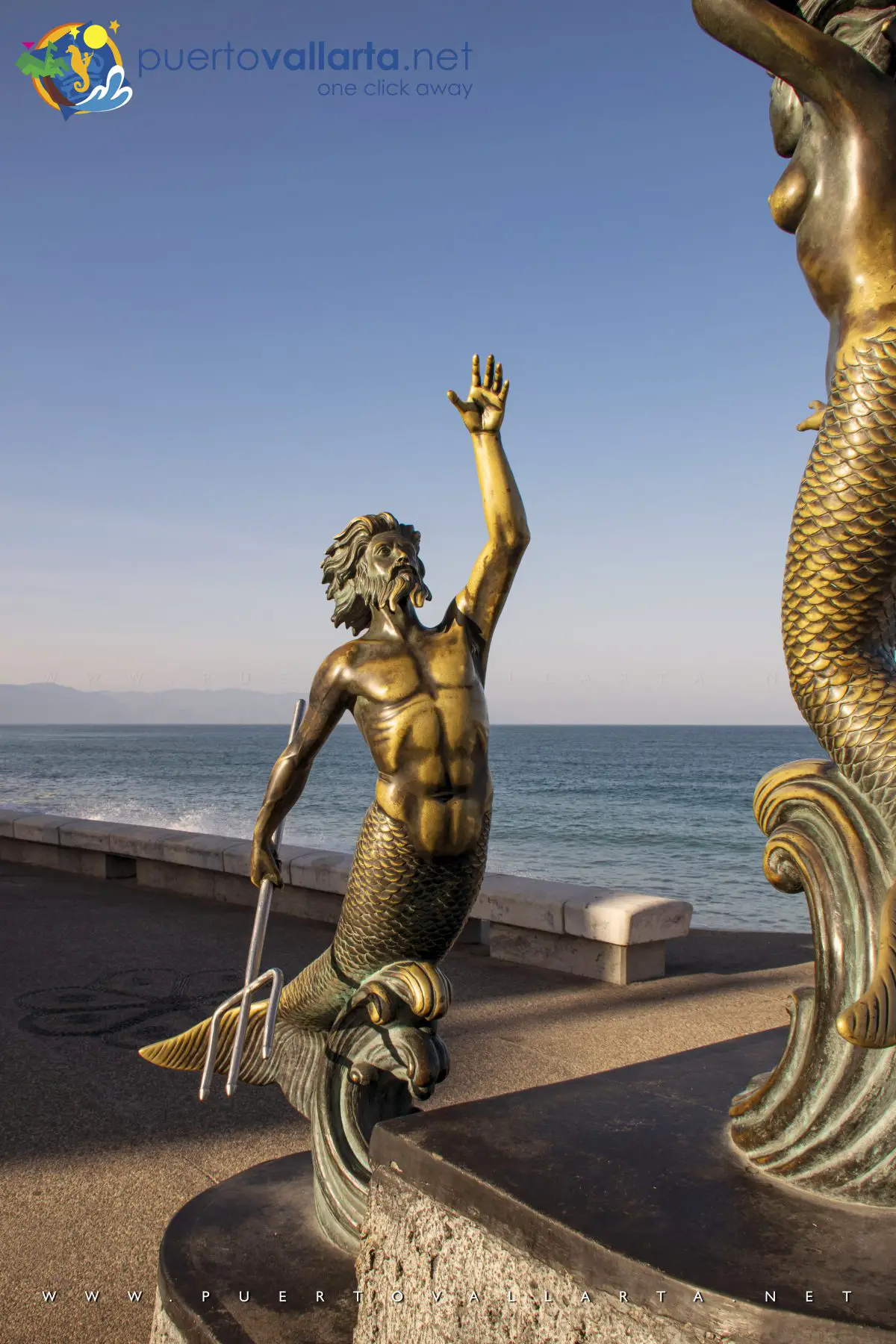
Detail of “Triton and Siren” sculpture (1990) Carlos Espino, Malecon / Boardwalk, Puerto Vallarta
It depicts Triton, one of the Greek gods of the sea as a merman (son of Poseidon and Amphitrite, God and Goddess of the sea respectively) reaching out to a Siren, Greek mythological creatures, formerly handmaidens of the goddess Persephone, that lured nearby sailors with their enchanting music and singing voices to shipwreck on the rocky coast of their island.
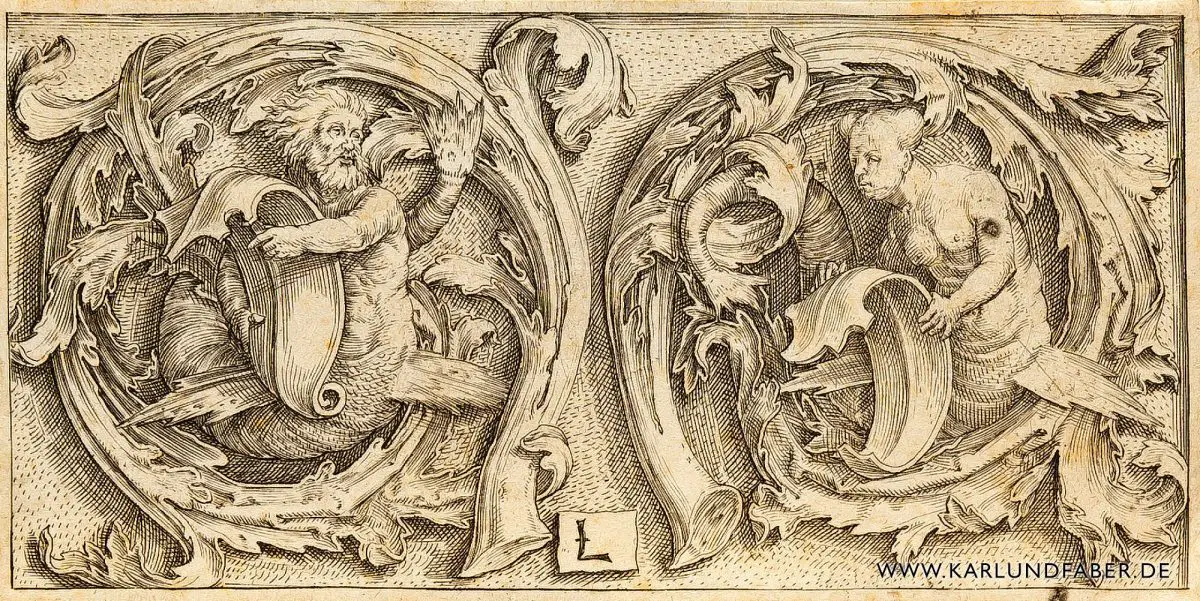
Triton and Siren, Lucas van Leyden, 1510
The name of the sculpture is, and should always have been “Triton and Siren”, for some unknown reason, despite authorship and intellectual property rights (plus a total lack of knowledge in Greek and Roman mythology 🙂 ), local authorities changed the name to “Neptune and the Nereid” when unveiling this statue on the Malecon.
In any case, considering the fact that the artist, Carlos Espino, was passionate about Greek-Roman mythology, this should inform us regarding the inspiration and detailed background of this sculpture. He would spend long hours studying and researching each element in his sculptures and would never mix up elements from either one of the cultures in his works of art.
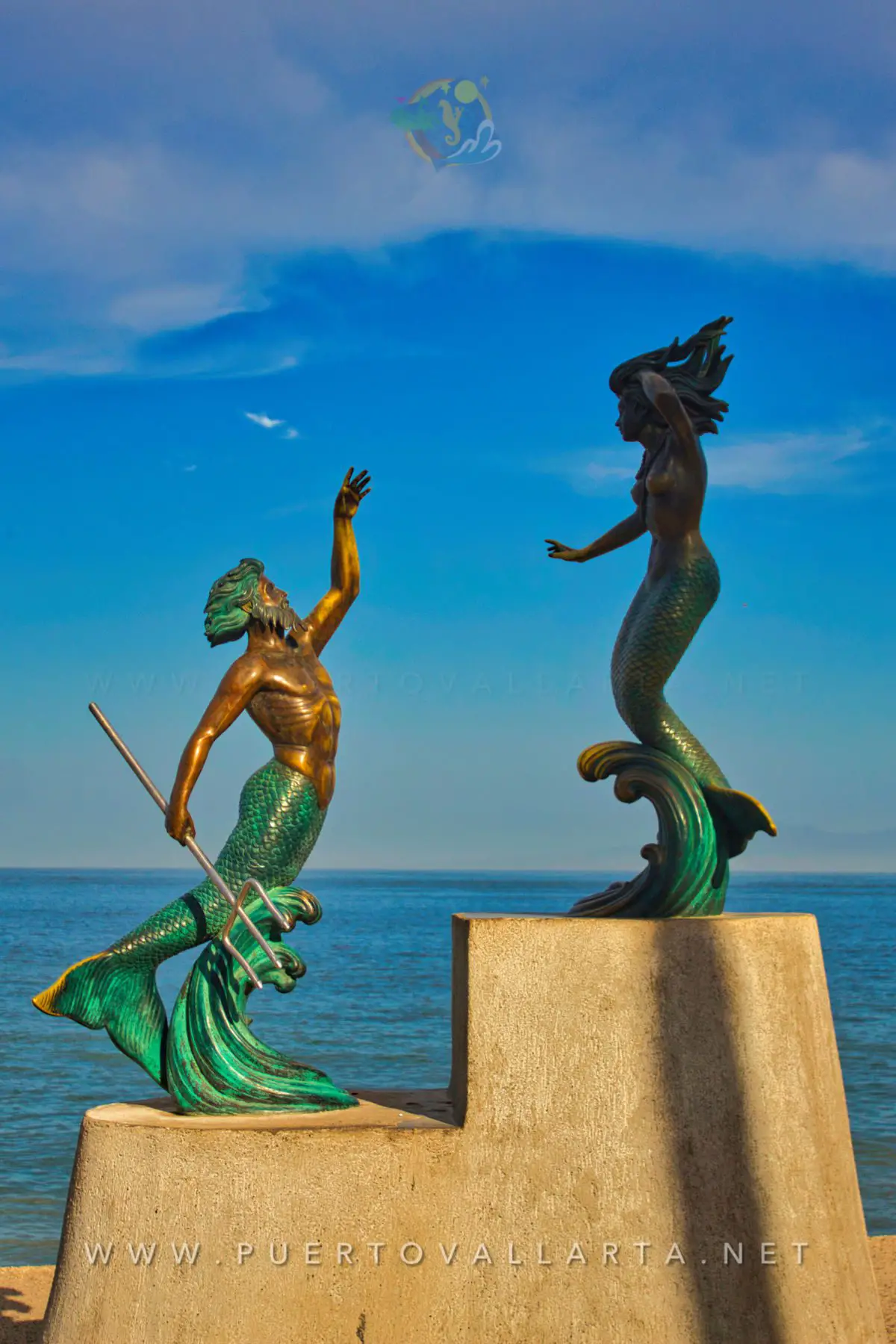
Triton and Siren, Carlos Espino on the Puerto Vallarta Malecon
I respectfully disagree with any name change and will continue showing the sculpture with its original name and as the artist established it.
Because the title was in Spanish, long before it was translated, there could be an added error when translating “Sirena” into English, as it can be translated into “mermaid” or “siren”. Mermaid is a more modern term and represents a creature that was inspired by Greek sirens, so, once again, based on what we know of the author, the most precise translation has to be “siren”, thus the translated title of the sculpture that we have chosen.

Where is the sculpture located?
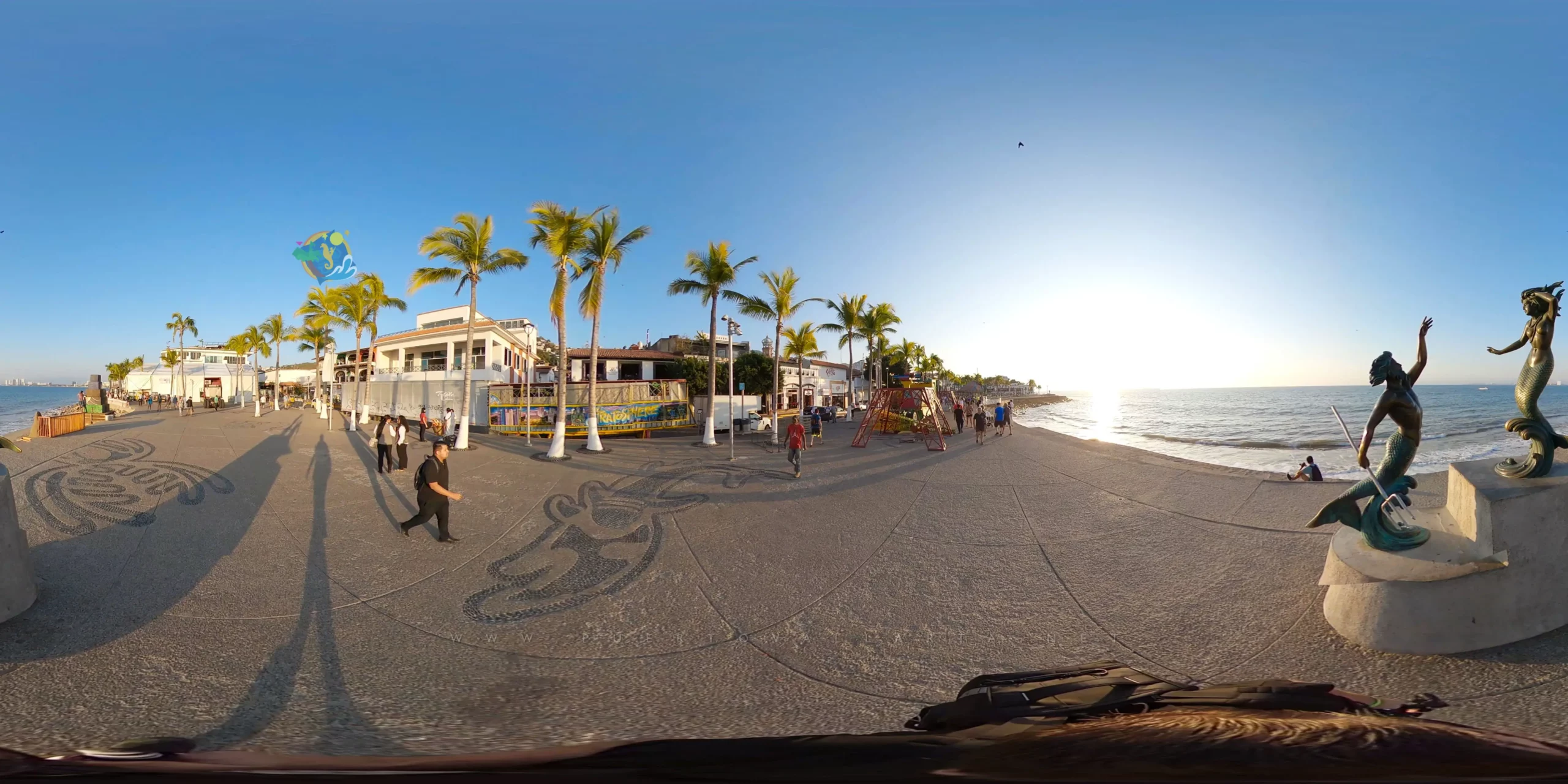
Triton and Siren (1990) Carlos Espino Barrón
The sculpture has been moved around a bit, currently, it’s located approximately where it was unveiled in 1990, for some years after the boardwalk was completely remodeled in 2011, the sculpture was placed where Abasolo street ends on the Malecon, by the Mandala.
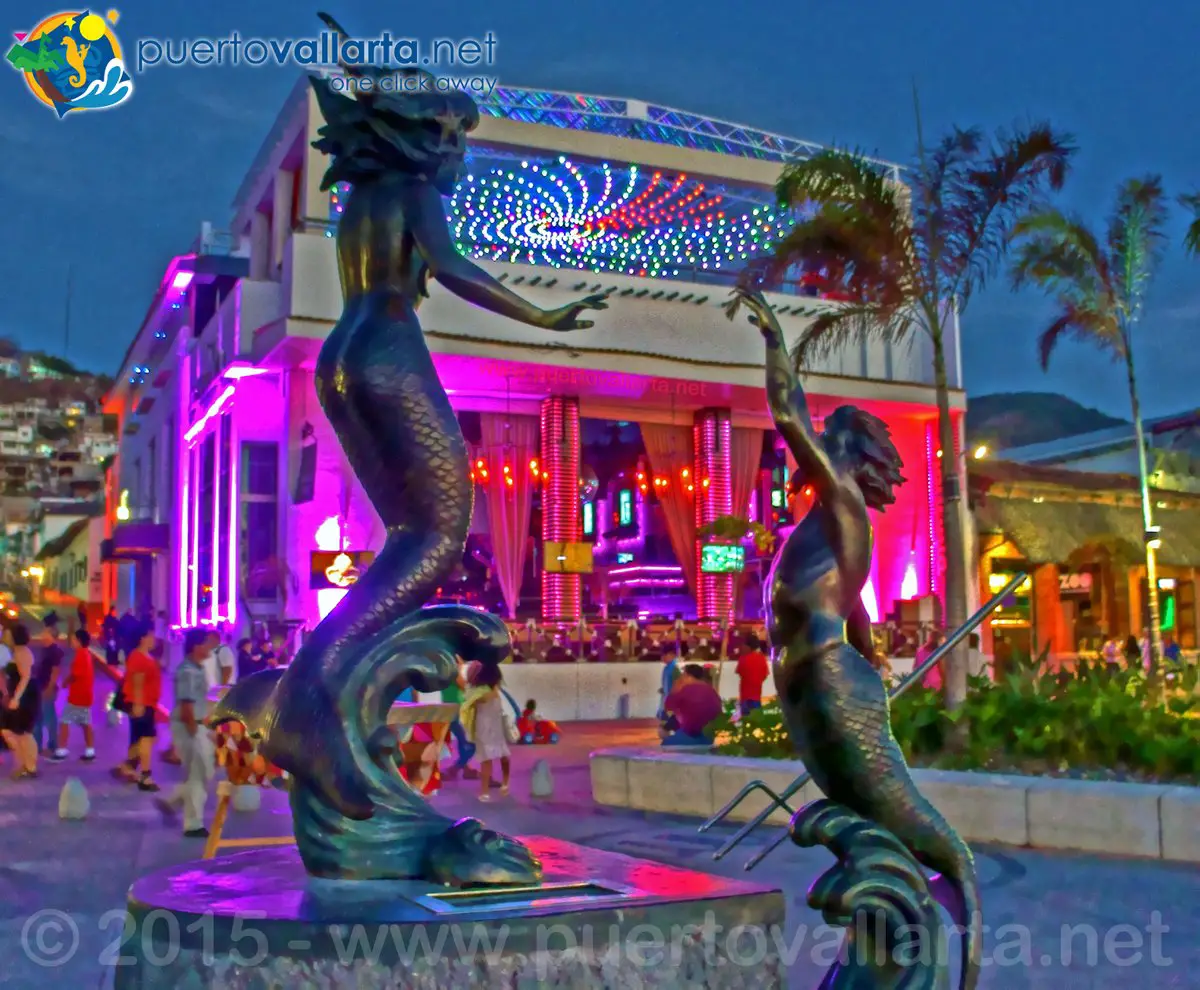
Triton and Siren Statue on the Puerto Vallarta Malecon/Boardwalk
Now it’s located on the Malecon where Mina Street ends on Morelos street in downtown Puerto Vallarta some 60 yards from the Seahorse statue. Triton and Siren is located between the sculptures “The Boy on the Sea Horse” to the south and “In Search of Reason” to the north.
Location Map
Carlos Eugenio Espino del Castillo Barrón Biography
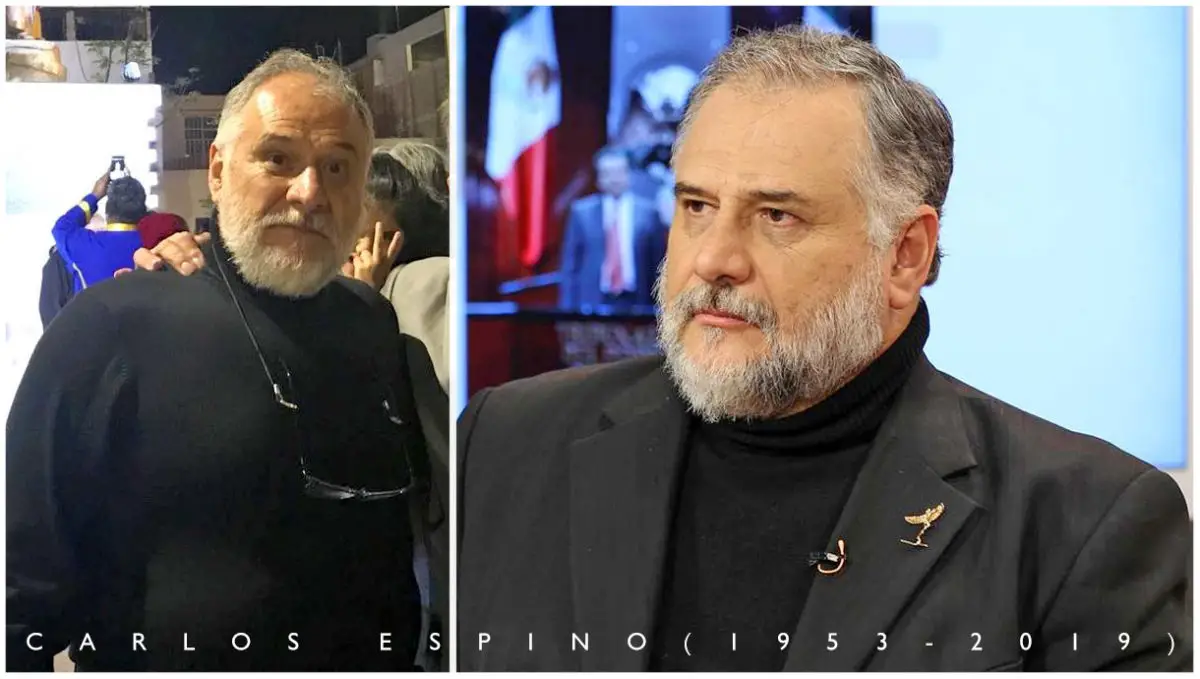
Carlos Eugenio Espino del Castillo Barrón (1953-2019)
Mexican sculptor, born on May 3, 1953. Carlos Espino is part of an Italian family of painters and sculptors. The Italian paternal grandfather named Carlos Espino Centurión, settled in Veracruz, Mexico and then Mexico City. The only one of his 10 brothers and sisters who devoted himself to sculpture full time. The artistic vocation marked his life since from the age of three he already tried to represent all kinds of objects with breadcrumbs.
In high school, he began his modeling practice at the Cristóbal Colón de la Villa school where he discovered his vocation, supported by Lasallian teachers. In high school, he took modeling courses with Professor Cantú from 1969 – 1971, from where he graduated with deep artistic conviction to enter the National School of Plastic Arts (ENAP) “San Carlos” in Mexico City in 1972.
ENAP calls a contest in 1974, in which it obtains the 1st. place.
Encouraged by these achievements, and in an incessant search for knowledge of the culture of the Mediterranean, he traveled to Italy, Paris, Greece and Morocco, between the years 1974 – 1975. From there he observed customs, architectural forms, as well as the use of shape and color in the various manifestations of the plastic arts. Carlos Espino’s work gets exposure in Mexico, thanks to a traveling exhibition in the southeast part of the country, organized by the INBA that year.
At the end of that year, he collaborated with Architect José Luis Ezquerra (director of “Las Hadas”), in the decoration of sculptural exteriors for the residence “Villa Coral”, in Manzanillo, Colima. From 1980, and to date, Carlos Espino has left a mark on national history through his sculptures, many monumental in size, either as individual figures, equestrian statues or as groups, placed in the main squares, important avenues around Mexico and some outside the country.
In 1981, he made the eagle for the monument to the Independence of the city of San Juan del Río, Querétaro, commissioned by the then municipal president, Jorge Herbert Pérez.
His approach was always more classical, academic and figurative, with the use of the living model, not inspired by modernist, avant-garde or abstract trends, but inspired by canons bequeathed from the Greeks and Romans. His main passion was mythology, especially the Greco-Roman, which nurtured and inspired his work. According to personal comments made by the artist, he numbered his works at more than a thousand sculptures.
One of his favorite works was “The Triumph of Poseidon” located in the central courtyard of the Secretariat of the Navy, commissioned by the Secretary of the Navy, Admiral Luis Carlos Ruano Angulo during the six-year term of the former Mexican President, Lic. Carlos Salinas de Gortari.
In 1989 he made the monumental sculpture of Felipe Ángeles, his first work located in Zacatecas (Cerro de La Bufa) with Pancho Villa and Pánfilo Natera. In the same esplanade that is visited by thousands of tourists every year, in 2014 he unveiled “Allegory of the Taking of Zacatecas”.
The four-meter-high effigy of Fray Antonio Margil de Jesús, commissioned by the municipality of Guadalupe in 2018, was his last work located in Zacatecas territory.
Carlos Espino passed away on March 26, 2019, in Mexico City.
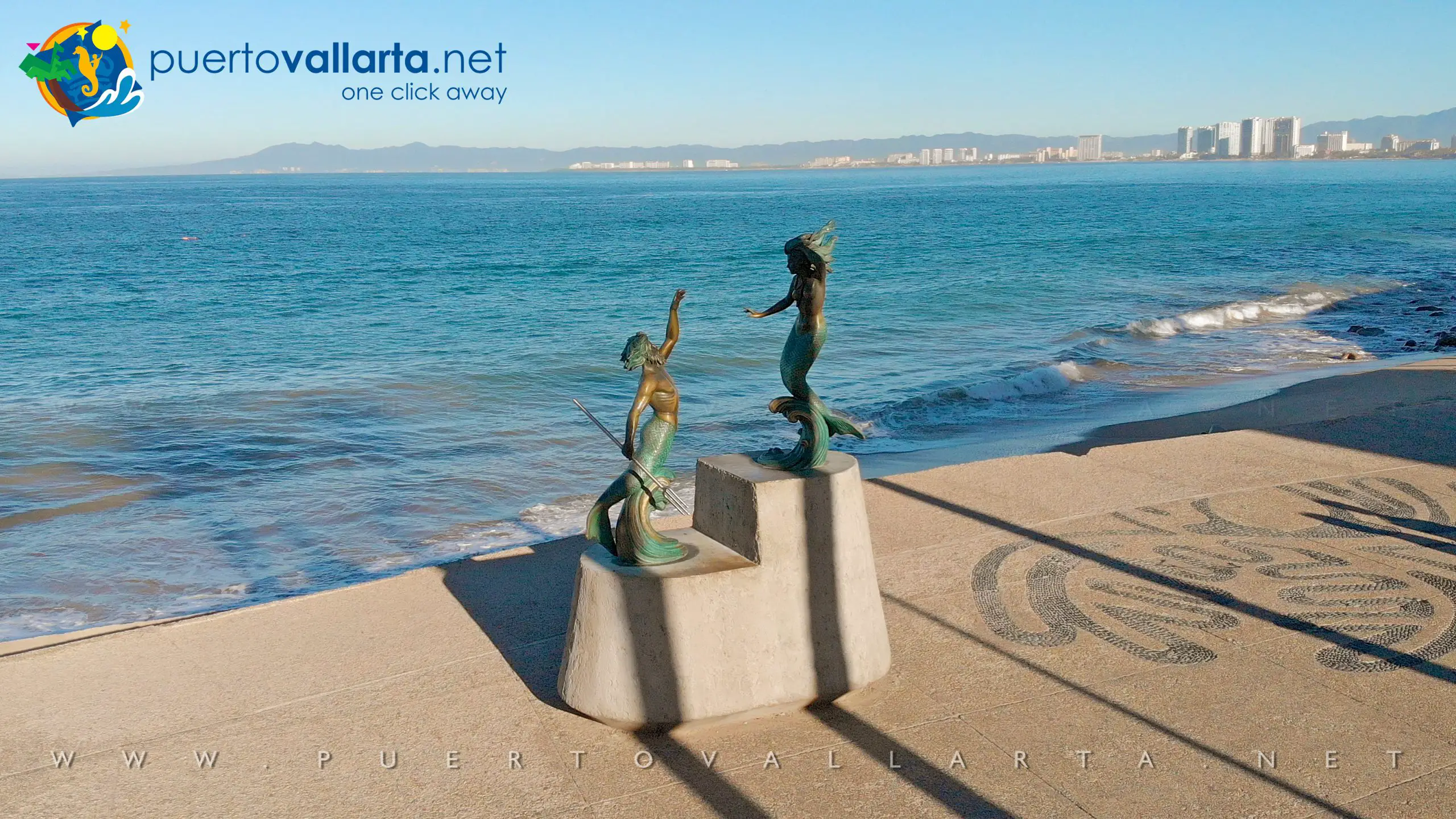
Triton & Siren (1990) Carlos Espino, Malecón/Boardwalk, Puerto Vallarta
References
- Entrevista ABC
Parte 1 https://www.youtube.com/watch?v=PPvBJYlFIS8
Parte 2 https://www.youtube.com/watch?v=hMqkJme_vyo - Triton & Siren https://www.sciencesource.com/archive/Triton-and-Siren–Legendary-Creatures-SS2626112.html
- Triton: https://en.wikipedia.org/wiki/Triton_(mythology)
- Siren: https://en.wikipedia.org/wiki/Siren_(mythology)
- Muere escultor Carlos Espino; sus obras embellecen a Zacatecas: https://www.elsoldezacatecas.com.mx/cultura/arte/muere-escultor-carlos-espino-sus-obras-embellecen-a-zacatecas-3369113.html
- Custodiará el Museo Zacatecano maquetas de escultura del artista Carlos Espino: https://www.cultura.gob.mx/estados/saladeprensa_detalle.php?id=48005
- La Salle rememora el talento escultórico de Carlos Espino: https://hoy.lasalle.mx/la-salle-rememora-el-talento-escultorico-de-carlos-espino/
- Legado de Carlos Espino en Zacatecas: http://www.cronistasoficiales.com/?p=116699
FAQ

Book tours & support us
- Best prices
- 100% Local Support
- 2 decades+ of experience in Puerto Vallarta
Puerto Vallarta news, tips & content
- New info every two weeks
- Free content, news, videos
- Unsubscribe at any time
Contact us via WhatsApp
- Talk with our reservations expert
- Real local and human support
- Book tours, hotels, transfers, and more.
Share this article, choose your favorite option!