Las Amapas Beach and how to get there
Features & amenities
Restaurants
Hotels
Swimming
Water Activities
Smooth Swell
Romantic Zone
About the beach
- Located in the Romantic Zone
- Between Los Muertos Beach (north) and Conchas Chinas Beach (south)
- A small 350 foot beach (110m)
more…
- Longitude/Latitude: 20.594970803939237, -105.24109481349322
- The name references the local tree (Amapa)
- Only access along paths from Los Muertos Beach or from Conchas Chinas


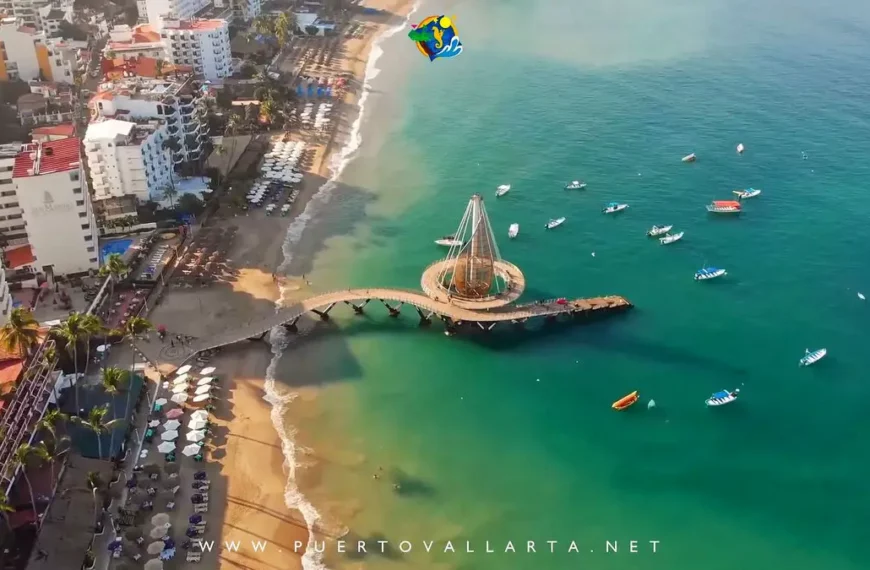
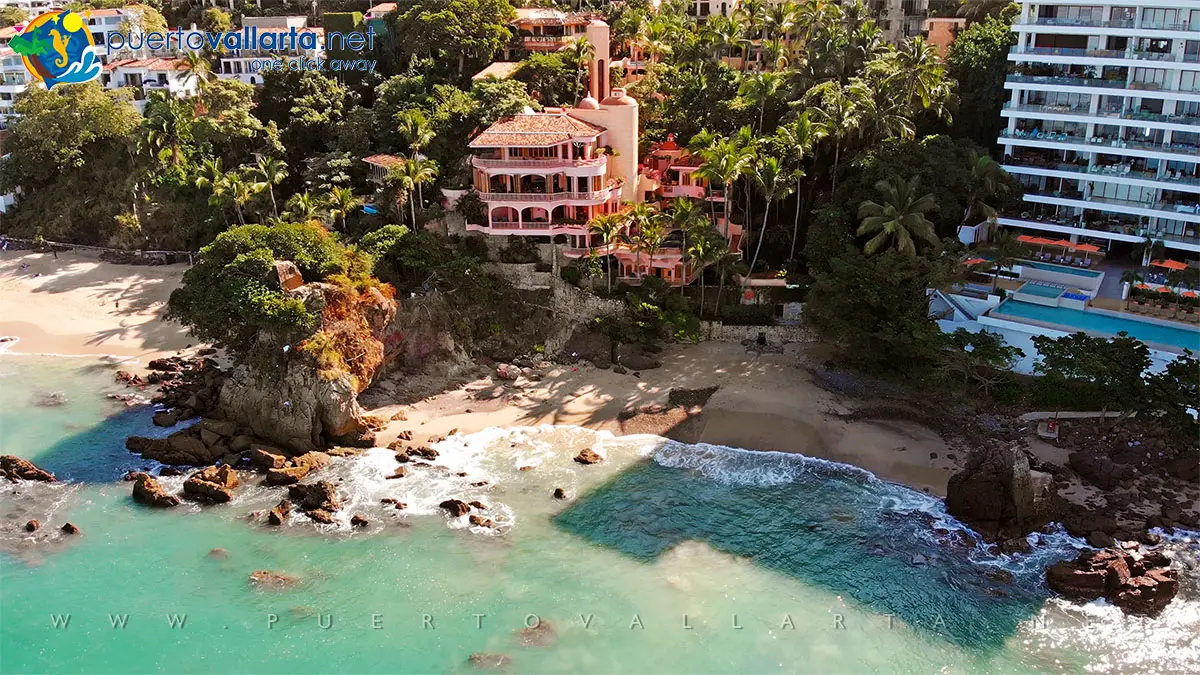
Introduction
Puerto Vallarta has a number of beaches in both the Downtown area, north of the Cuale River and in the Romantic Zone (south of the river).
One of these is Las Amapas Beach, located in the southern end of the Old Town by the sea (Romantic Zone) the area south of the Cuale River in Puerto Vallarta, Jalisco, Mexico.
The beach itself is quite small, a short stretch of about 350 feet (110m) of golden sand. The beach’s name comes from the trees that live in the area, Amapas (Tabebuia rosea), a tree species that is found in Mexico and all the way down to Ecuador that can grow up to 50 feet tall.
Where is Las Amapas located?
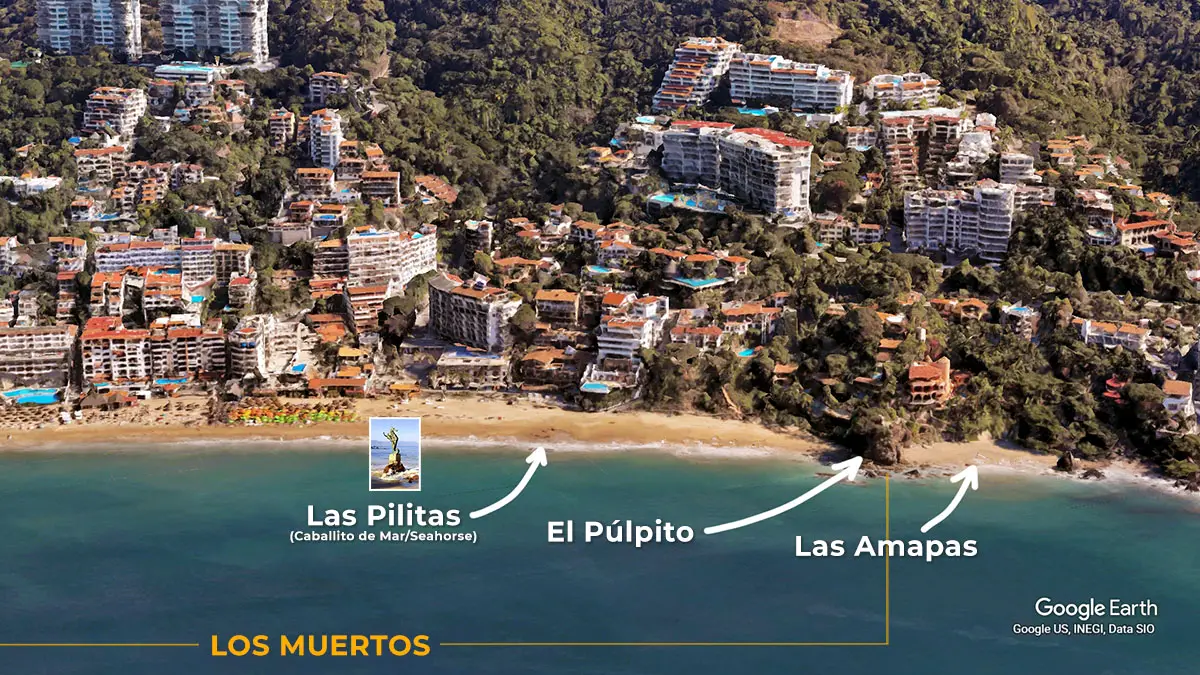
Las Amapas Beach, is located in the southern end of the Old Town by the sea (Romantic Zone) the area south of the Cuale River in Puerto Vallarta, Jalisco, Mexico.
The beach is located just south of Los Muertos Beach and extends from El Púlpito, the rocky formation, like a peninsula, that sticks out on the south end of Playa Los Muertos to Conchas Chinas Beach.
There is a path with steps that takes you over the ridge of El Pulpito (The Pulpit) and down to Amapas, there are parts that have eroded a bit, so you have to move carefully and it’s certainly not a path for those who have physical limitations.
How can you get to Las Amapas Beach?
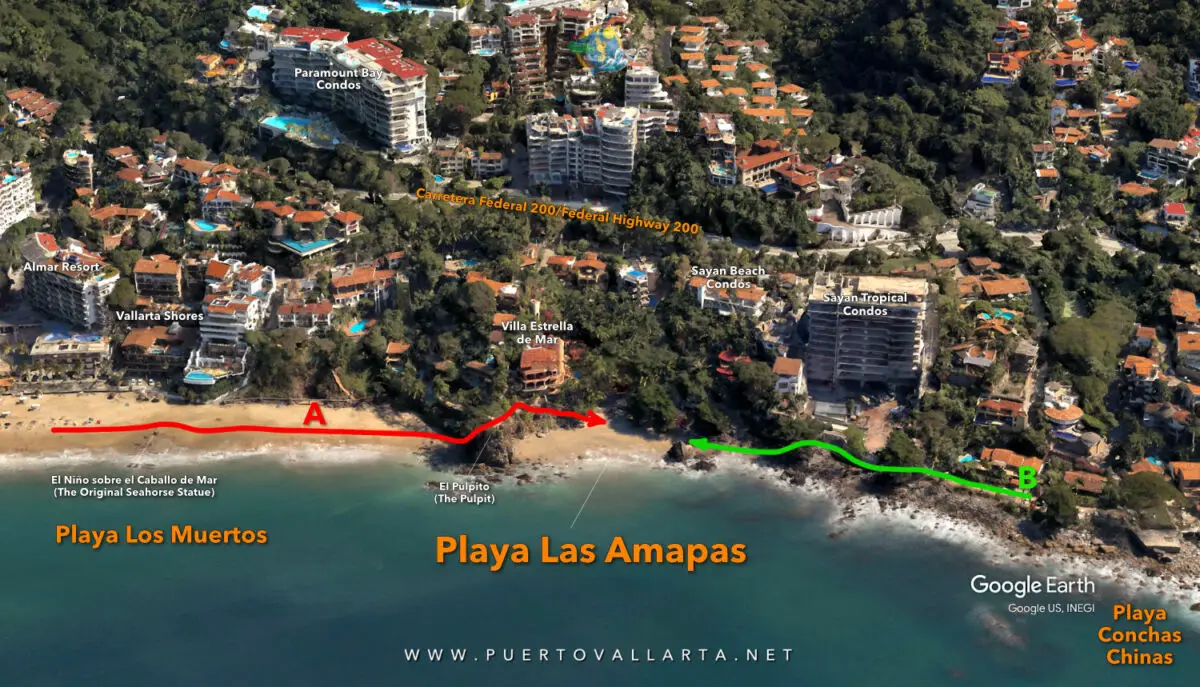
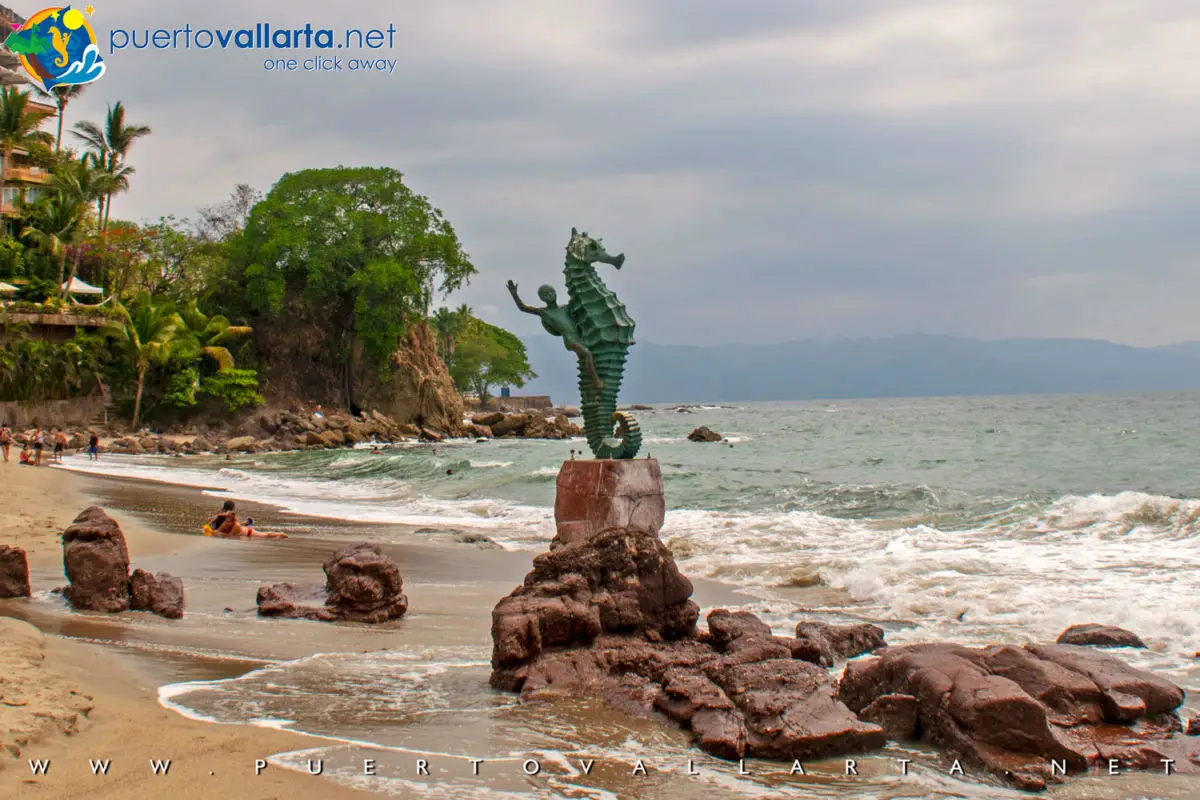
You only have two ways to get there by land. Walk to the southern end of Los Muertos Beach, just past Las Pilitas (The Small Baptismal Fonts) where the original Seahorse statue is located and walk to the base of El Púlpito (The Pulpit), the rocky outcropping that separates Los Muertos and Las Amapas. You’ll see a path start off there. The video above shows the route.
Another way is to approach the beach from the south. You’ll start off on Amapas Street either by the highway or following Santa Barbara Street. You walk to the end of this street arriving to the edge of the sea, you’ll have a large tree right in front of you. Walk to the right along Amapas street and at the end you’ll see a portal and a paved path. Follow it along the edge of the buildings, you’ll be on Las Amapas beach when the path ends.
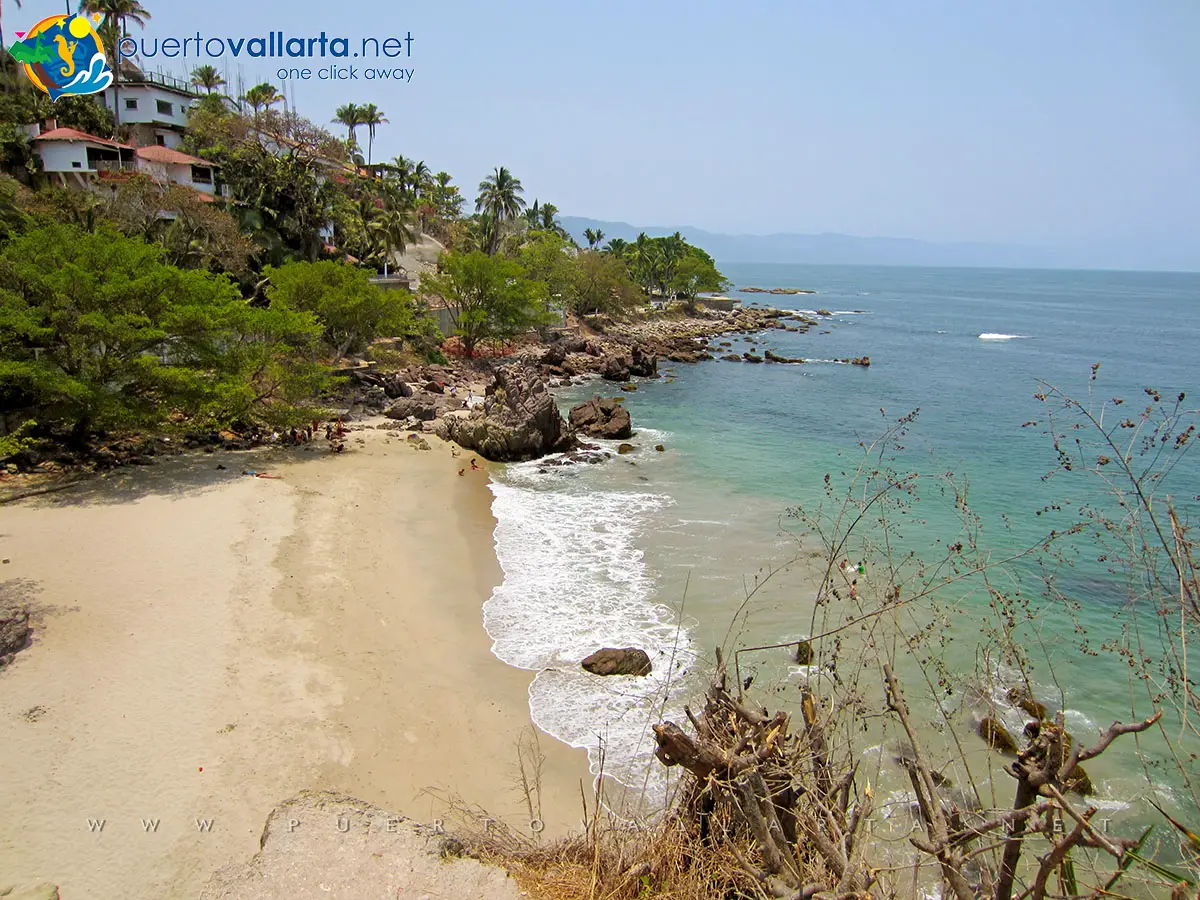
Las Amapas Beach, Puerto Vallarta
What can you do on this beach?
The beach is flanked by rocks, to the right the aforementioned Pulpit Rock and to the left, rocks that extend to Conchas Chinas Beach to the south.
The beach itself has pale yellow sand of medium texture, the waves are normally soft and the water is the transparent green-emerald seawater of the bay and its well-kept beaches. There are several trees on the shore that offer nice shade, if necessary (some are Amapas, by the way).
When you are at Las Amapas Beach you can stroll up and down the edge. To the north you go up the path to The Pulpit and the Punto Muerto Lookout. You can also walk down the path from The Pulpit to Los Muertos Beach with all its attractions.
To the south of Amapas there is a comfortable cemented path that takes you all the way to Conchas Chinas beach.
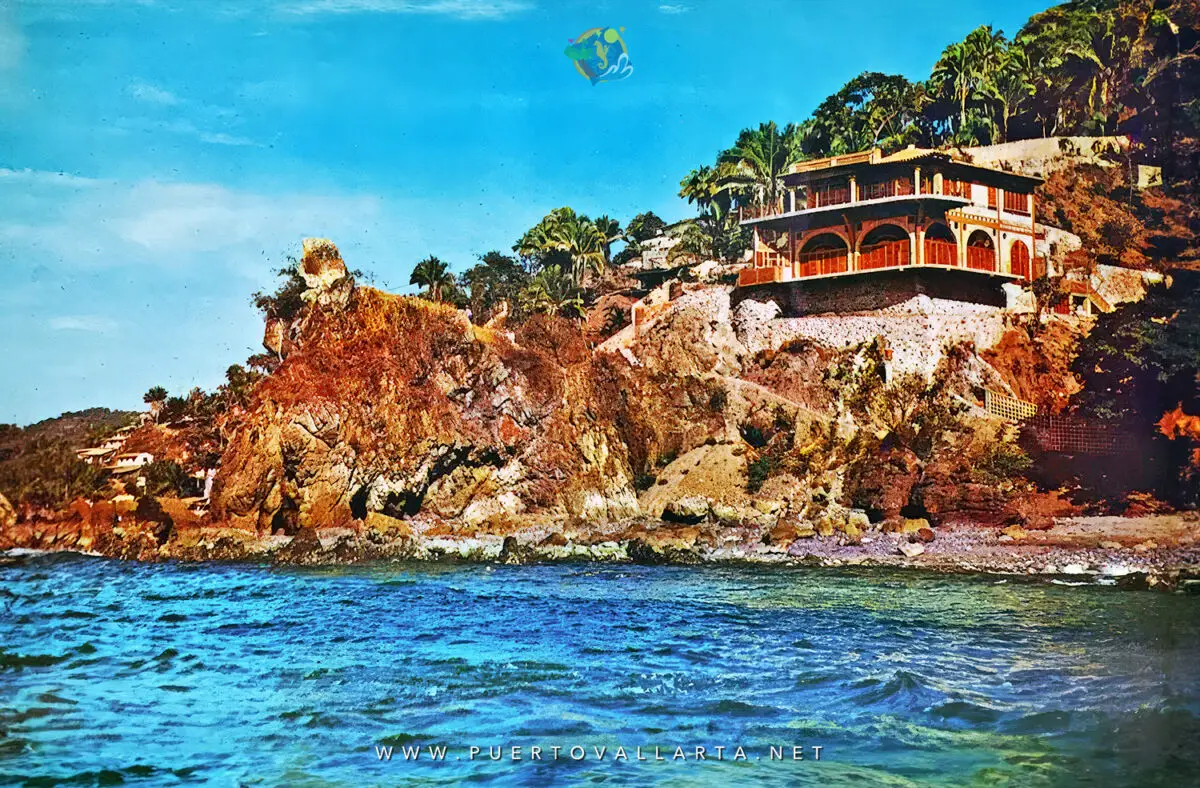
Some history
CHRONICLES OF PUERTO VALLARTA
By the City Historian, Juan Manuel Gomez Encarnación.
One, undoubtedly important author, is Manuel Andrade Beltran from Puerto Vallarta, who has written several interesting books, among them the one entitled “Unforgettable Times of Puerto Vallarta (Tiempos Inolvidables de Puerto Vallarta)”, published in 2006 by the University of Guadalajara. We present this small fragment from his book.
“… In the summer, the families of Puerto Vallarta liked to go every Sunday to Las Amapas Beach to spend the day. Almost everyone would walk there carrying their food: dried fruit, meat for the grill and tortillas; there was plenty of firewood there.
This beach could only be reached on foot or by canoe, since at that time (1942-1950) there was no road, everything was forest and plots with abundant coquito de aceite (small oil coconut).
The people who brought their canoes would fish and harvest oysters; each family settled under a tree or made small palapa huts. After the families bathed in the sea, they would go to rinse off in the stream of Las Amapas; the water of this river was very clean and fresh.
Men liked to go to gather ripe small oil coconuts and eat the pulp, it is very tasty. Sometimes they would throw stones at the coconuts. When they returned from these trips, families would get ready to go to mass; at that time there was a lot of religious devotion, that is to say, Vallarta was a very religious town”.
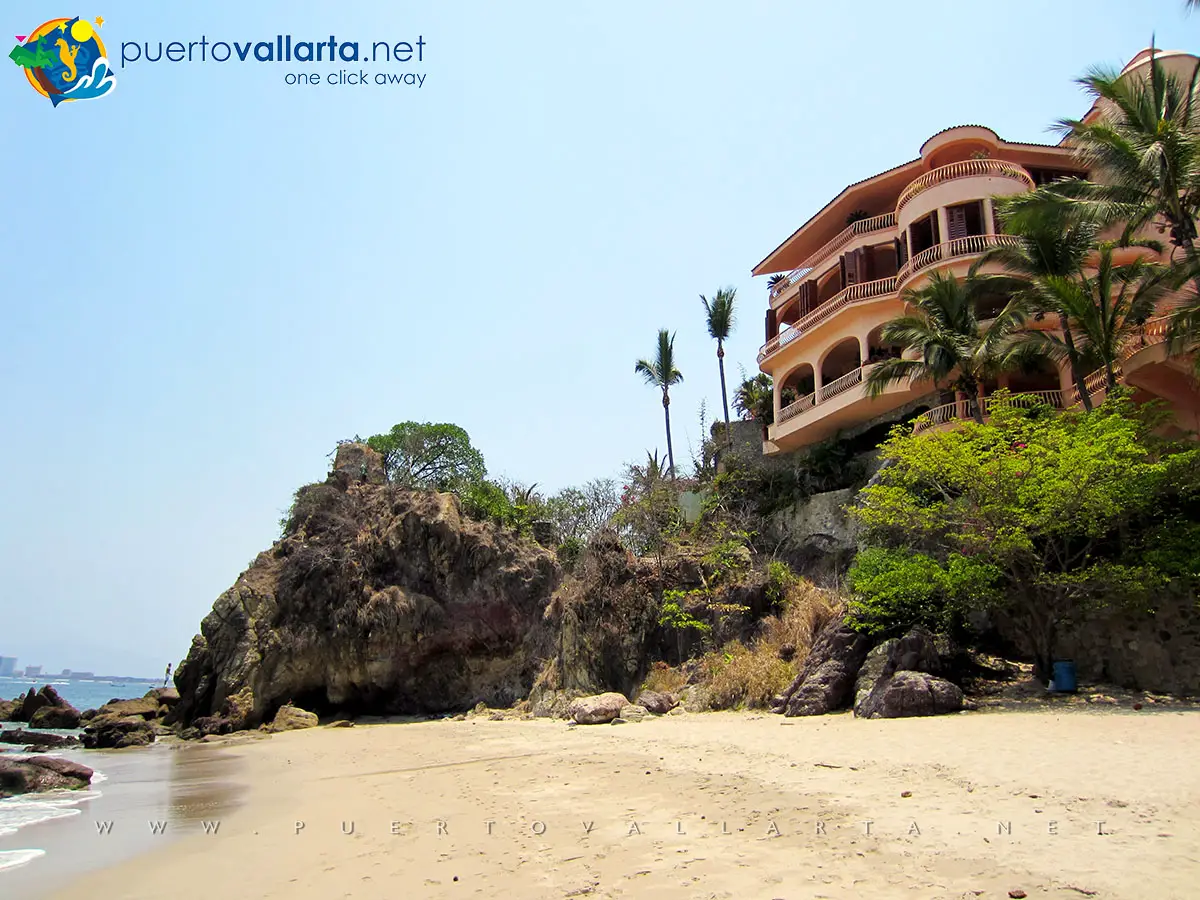
Las Amapas and El Púlpito from the South
Tips
On this beach there are no services and, therefore, it is a favorite beach for romantic couples and small families who enjoy the tranquility and seclusion it offers.
We recommend either taking your garbage and waste with you or placing it in the garbage containers available on the south end of the beach.
Location map
FAQ

Book tours & support us
- Best prices
- 100% Local Support
- 2 decades+ of experience in Puerto Vallarta
Puerto Vallarta news, tips & content
- New info every two weeks
- Free content, news, videos
- Unsubscribe at any time
Contact us via WhatsApp
- Talk with our reservations expert
- Real local and human support
- Book tours, hotels, transfers, and more.
Share this article, choose your favorite option!