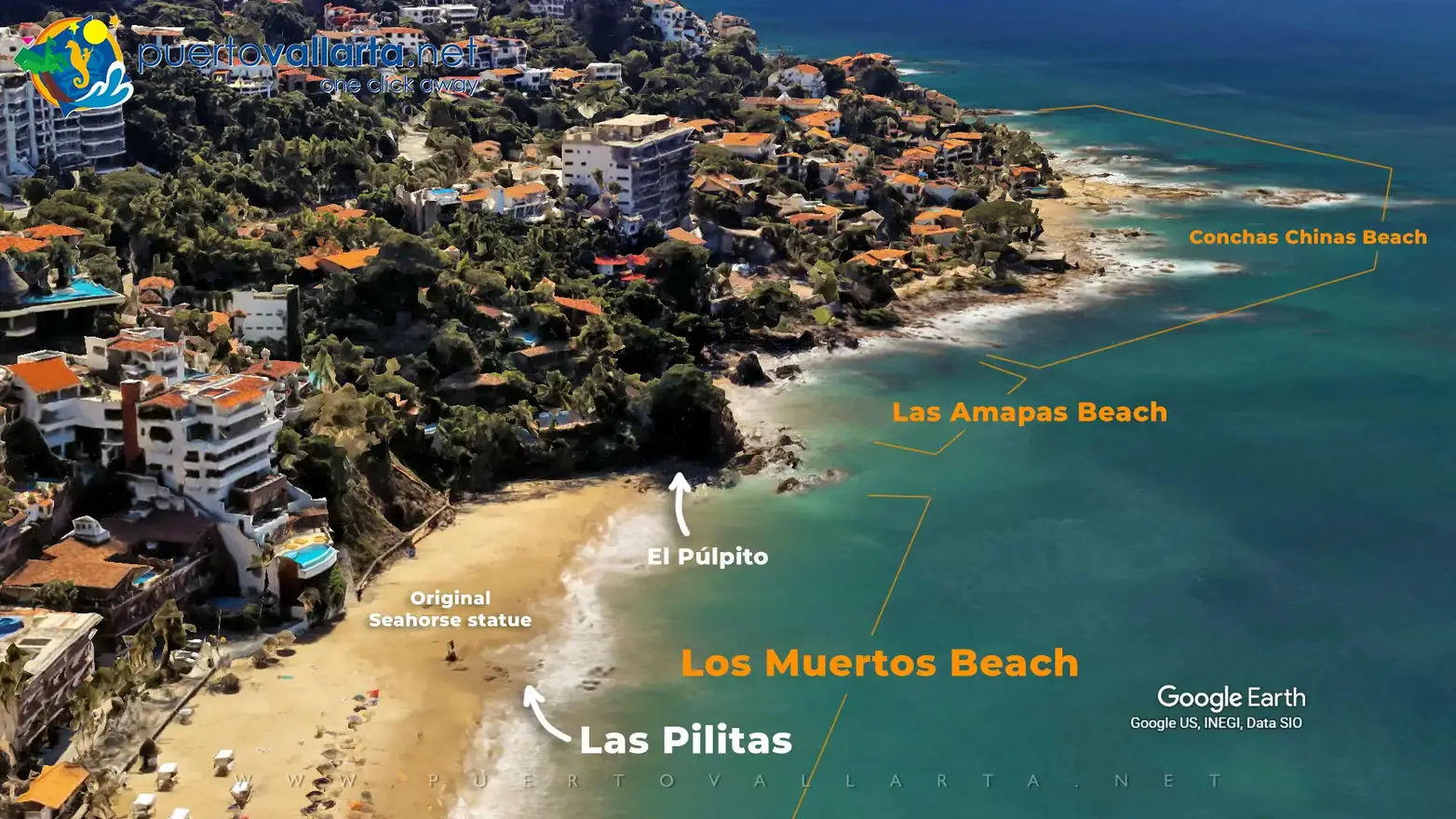
Las Pilitas (baptismal fonts), Los Muertos Beach, close to El Pulpito (Romantic Zone, Puerto Vallarta)
Introduction
Las Pilitas (the small baptismal fonts) and El Púlpito (The Pulpit) are two separate rock formations found on the southern end of Los Muertos Beach in Old Vallarta (Romantic Zone).
In this article we’ll concentrate on Las Pilitas, a group of rocks and boulders that are very recognizable because they are where you now can find the original Seahorse statue, a bigger replica is found on the Malecon and many are surprised when they find this one too.
Las Pilitas video


Las Pilitas, a bit of history
By Prof. Carlos Munguia Fregoso (1938-2005)
Official historian of Puerto Vallarta
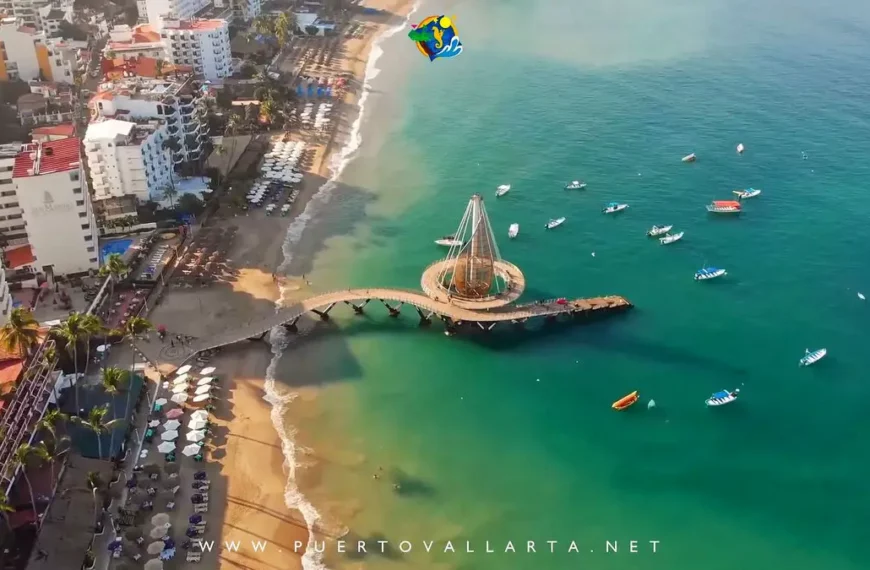
The fine sands of Los Muertos Beach extend from the end of Francisca Rodríguez Street -Hotel Marsol- all the way to the rock formations known as Las Pilitas and El Pulpito. During the last century, the beach was used to load ships with metals produced by the Cuale and San Sebastián mines: “The gold from the mines, plates and ingots were moved by land and at Los Muertos Beach, they awaited the arrival of the ships that would transport them to their destination.”
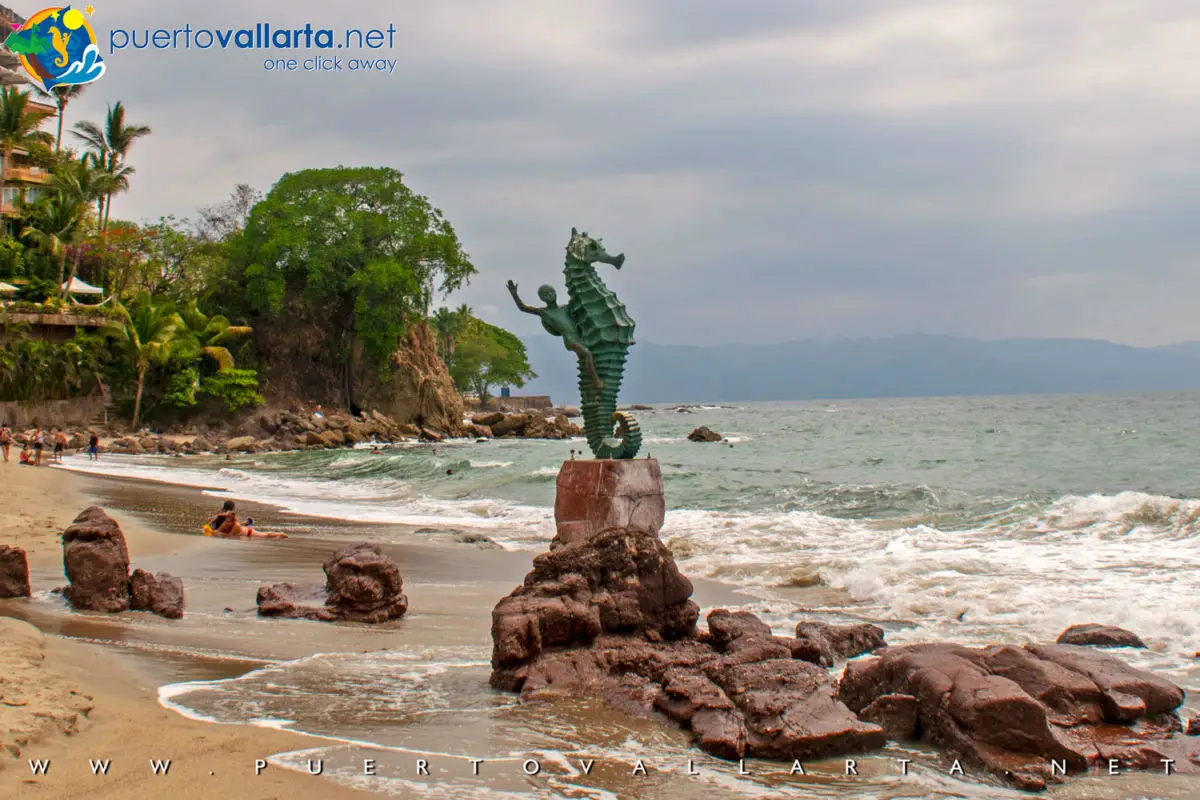
Las Pilitas is the group of rocks at the end of the beach where the bronze seahorse statue by Rafael Zamarripa, El Caballito, stands. This representation of a small boy riding on the back of a seahorse has become one of Puerto Vallarta’s symbols.
At the end of World War II, one of the landing craft, an LST (Landing Ship, Tank) used by the U.S.A. Navy for landing troops, ran aground at Las Pilitas. There had never been any war manoeuvres in the bay, but every once in a while North American coastal patrol boats would sail into the bay just in case there were Japanese submarines in the area. The proximity of the Gulf of California made them nervous because of the possibility of an invasion through the gulf.
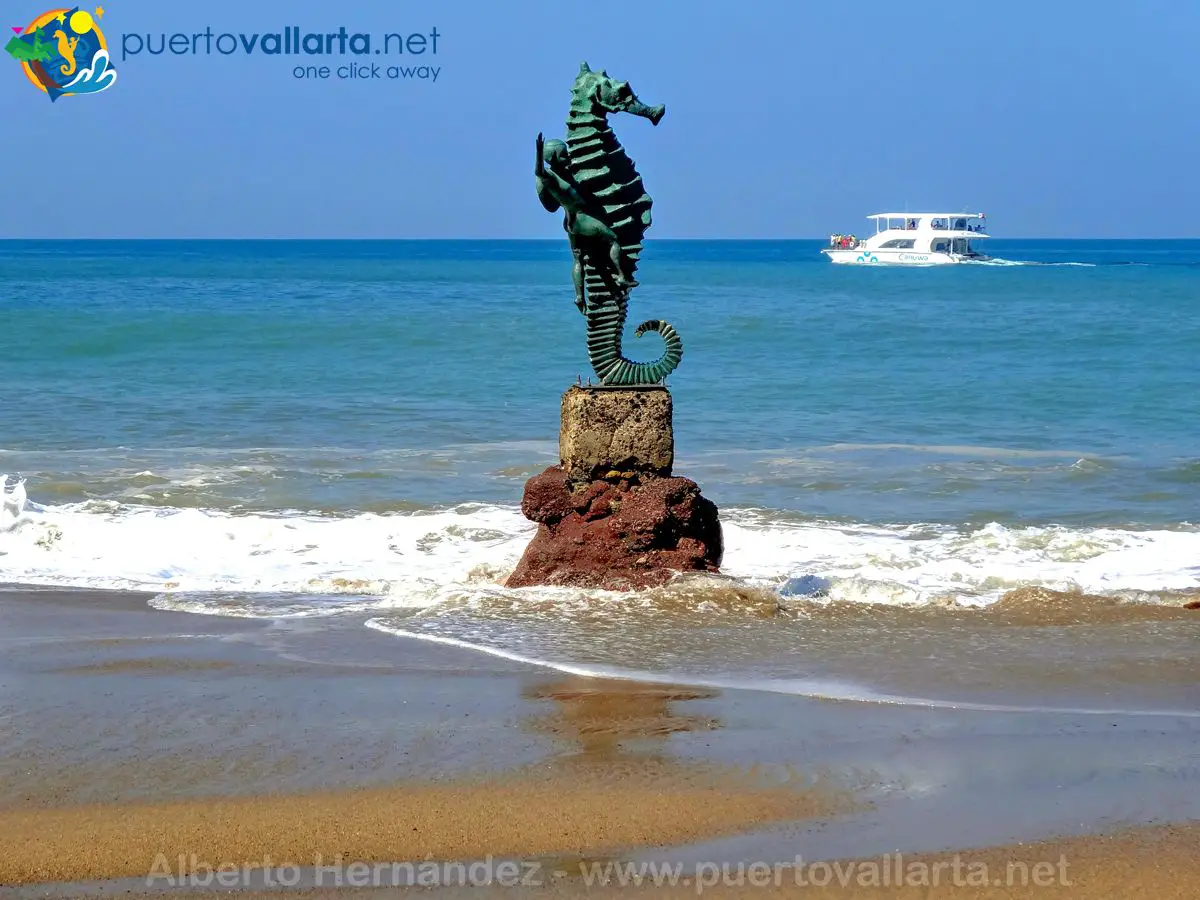
The Boy on the Seahorse, Los Muertos Beach, Puerto Vallarta
The landing craft was never removed. There it sat, its landing ramp lowered, at times completely covered by sand, and at others, completely exposed. For many years children used it to play and invent their games until time, salt and sand eroded it until not a trace was left.
What is Las Pilitas?
As I already mentioned, Las Pilitas (the small baptismal fonts) is a group of rocks that at the beginning of the last century were much more visible and more noticeable in what is the southern part of Los Muertos Beach. As there were more uncovered rocks, pools of seawater were formed in what looked like a baptismal basin, hence the name. nowadays a few of those rocks are barely visible and the name is not so obvious.
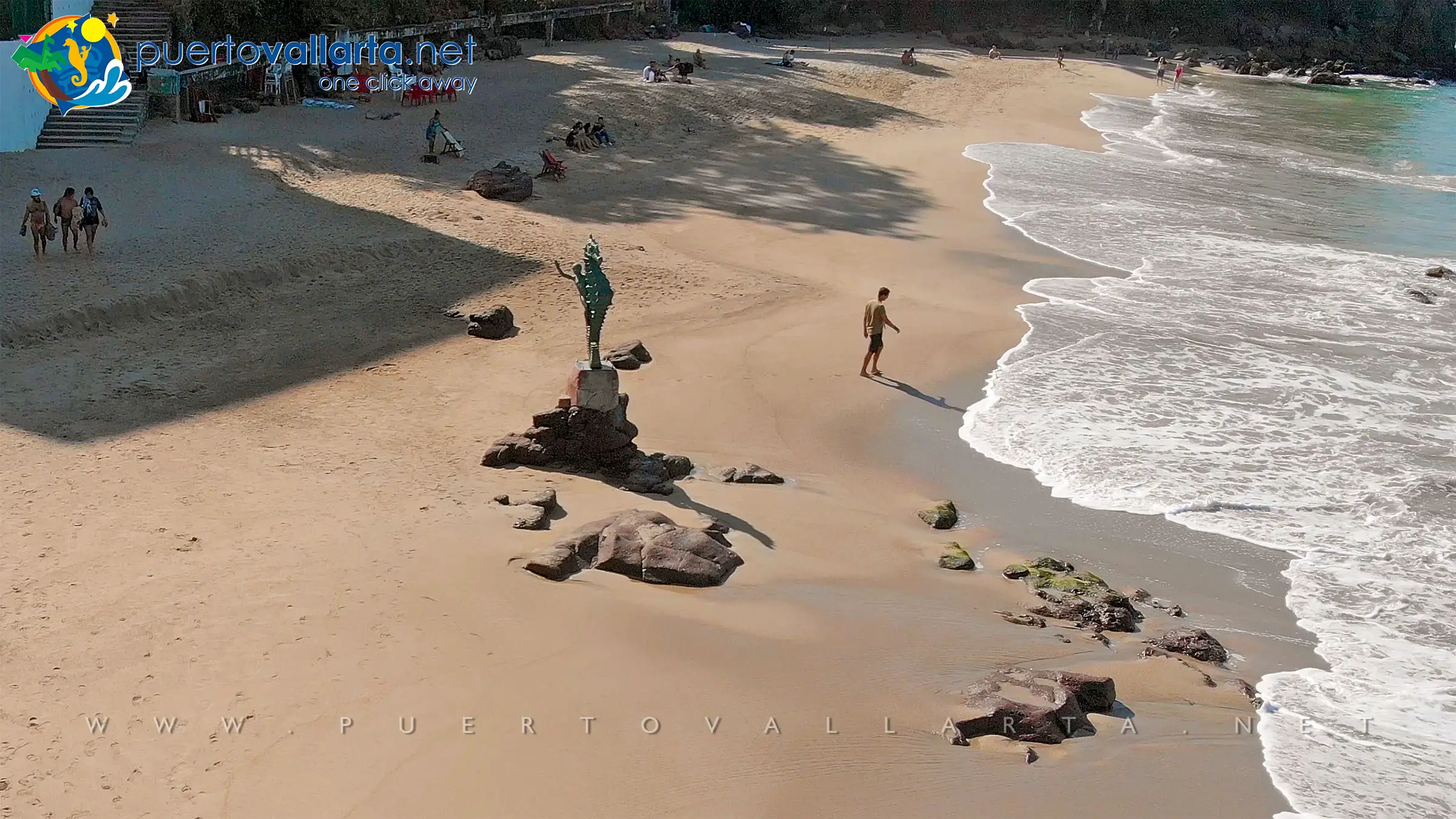
The Boy on the Seahorse (Rafael Zamarripa), Los Muertos Beach, Puerto Vallarta
At present they are more known as being the place where the bronze sculpture of Master Rafael Zamarripa is located, representing a boy riding on the back of a sea horse, the official title is “The Boy on the Seahorse“, was sculpted in 1960 by a young Rafael.
It was originally placed here at Las Pilitas in 1968 and after a strong storm, it was lost in the sea. A new one was commissioned and in 1976 placed on the Malecon, where you can see it today. The original sculpture was recovered and is now once again on display at Las Pilitas.
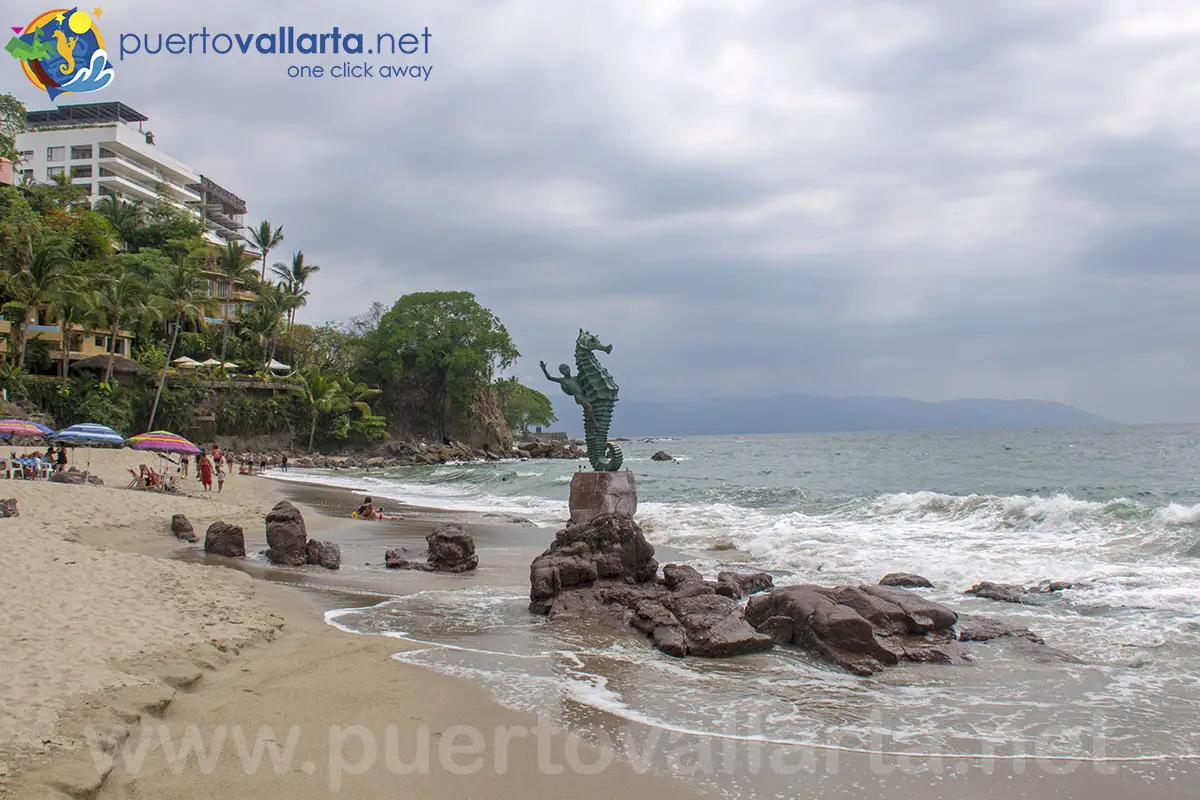
The Boy on the Seahorse and The Pulpit in the background, Los Muertos Beach, Puerto Vallarta
If you walk south along Los Muertos Beach, you’ll pass by the pier, the various restaurants and many hotels. You’ll know you are getting close to Las Pilitas when you spot the seahorse statue, the dark brown-red rocks pockmarking the area, you’ll be able to see The Pulpit in the background, the small hill, that marks the end of Playa Los Muertos.
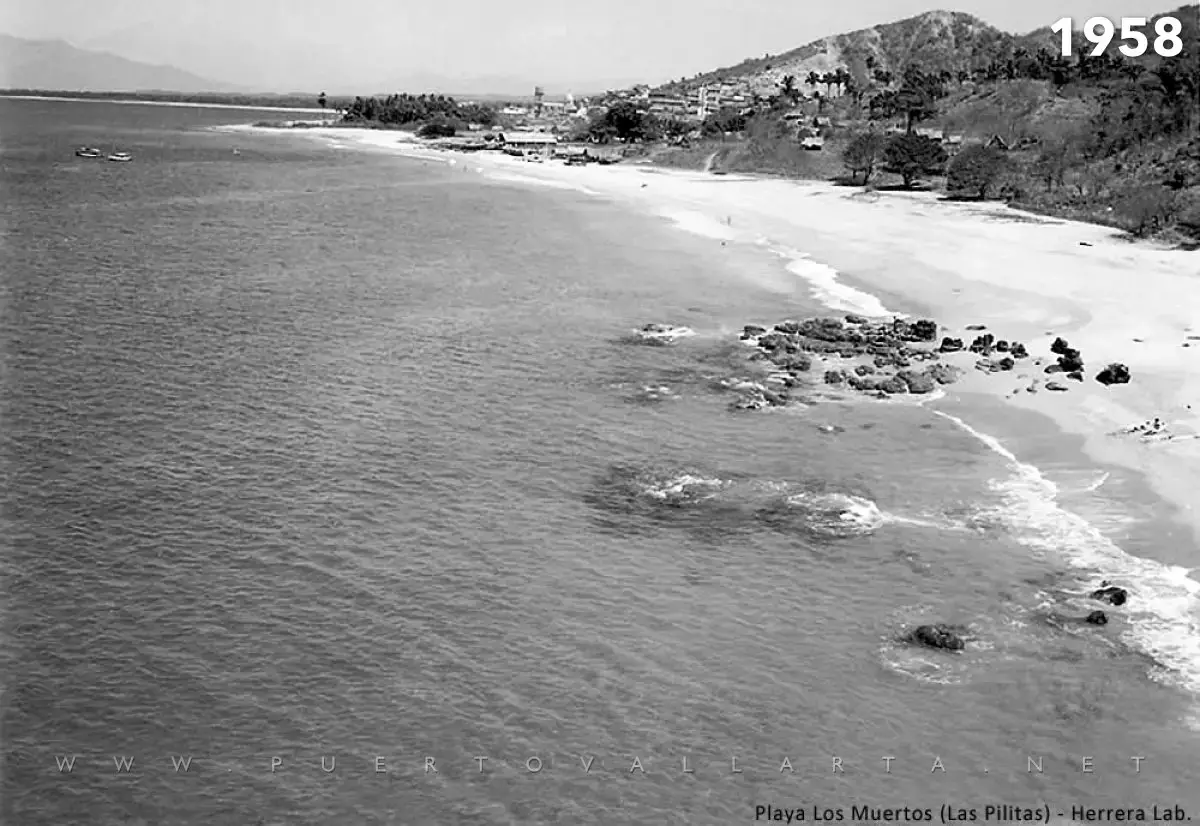
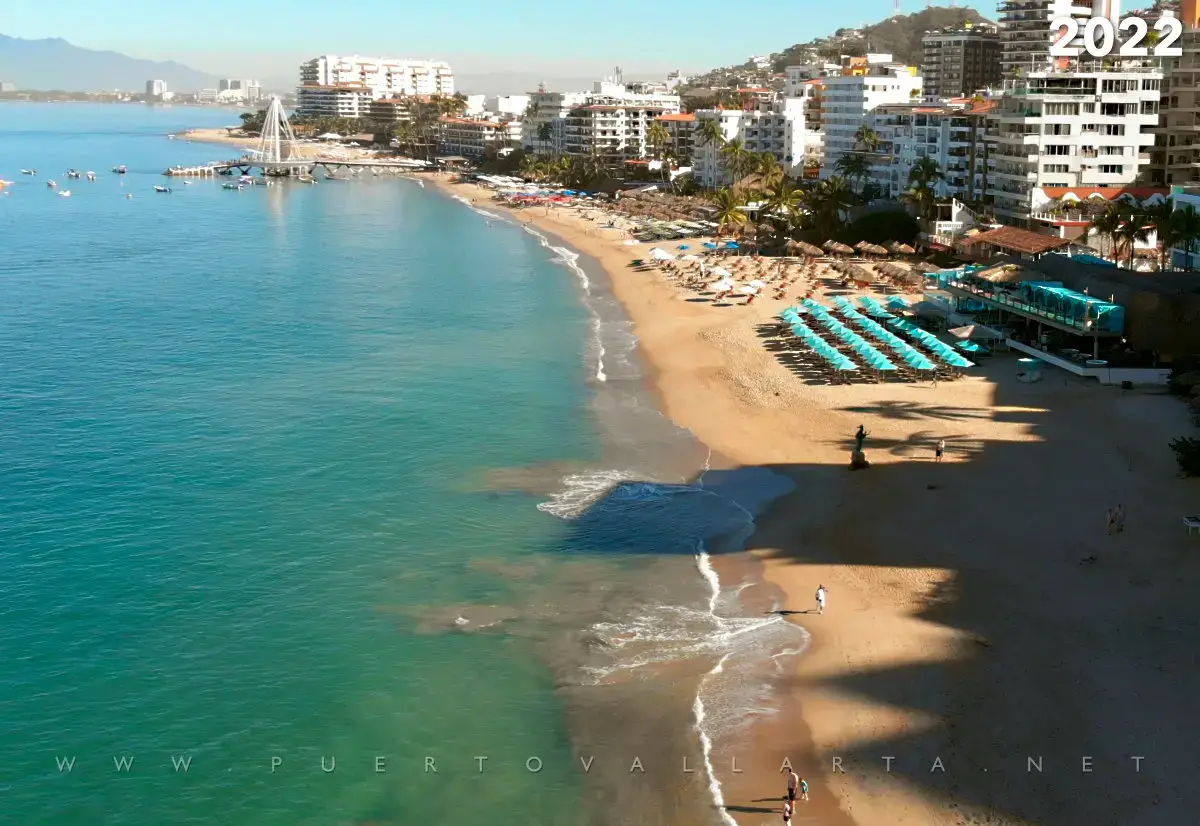
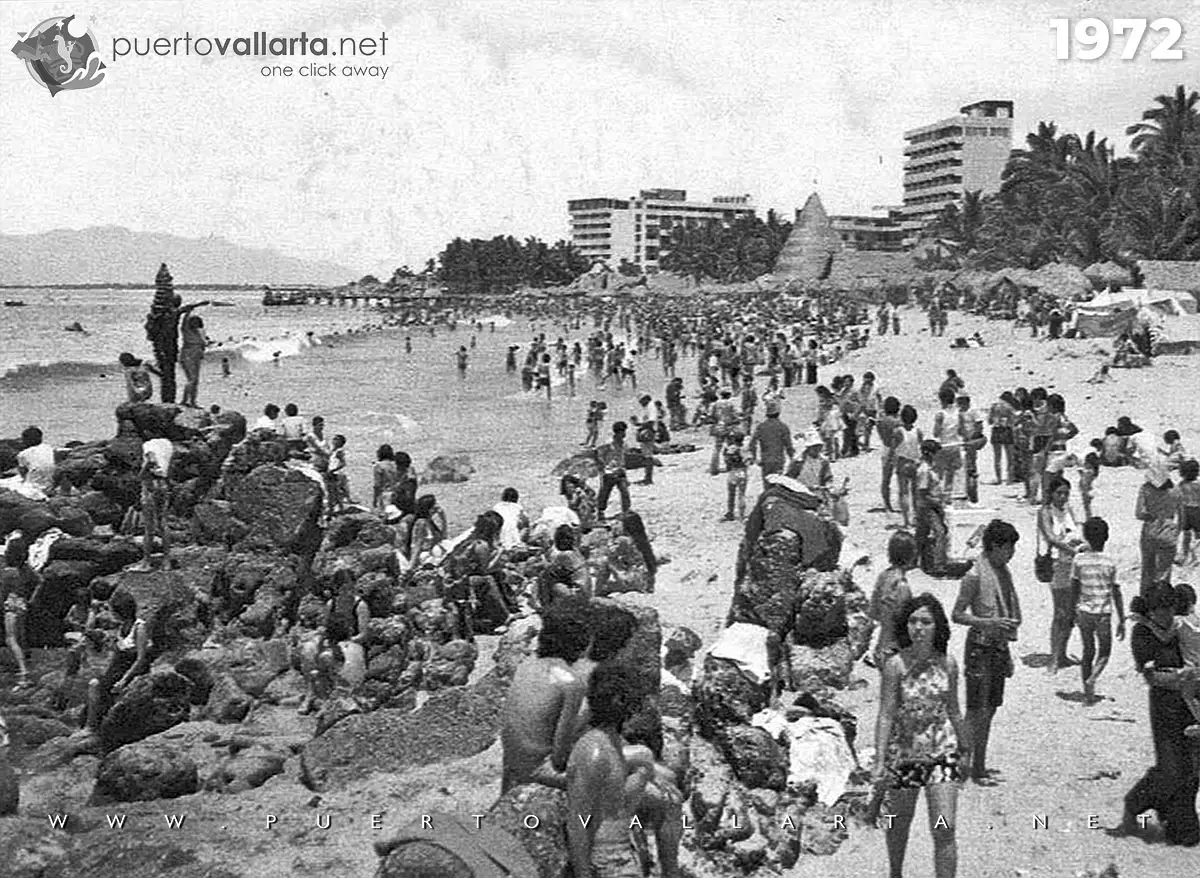
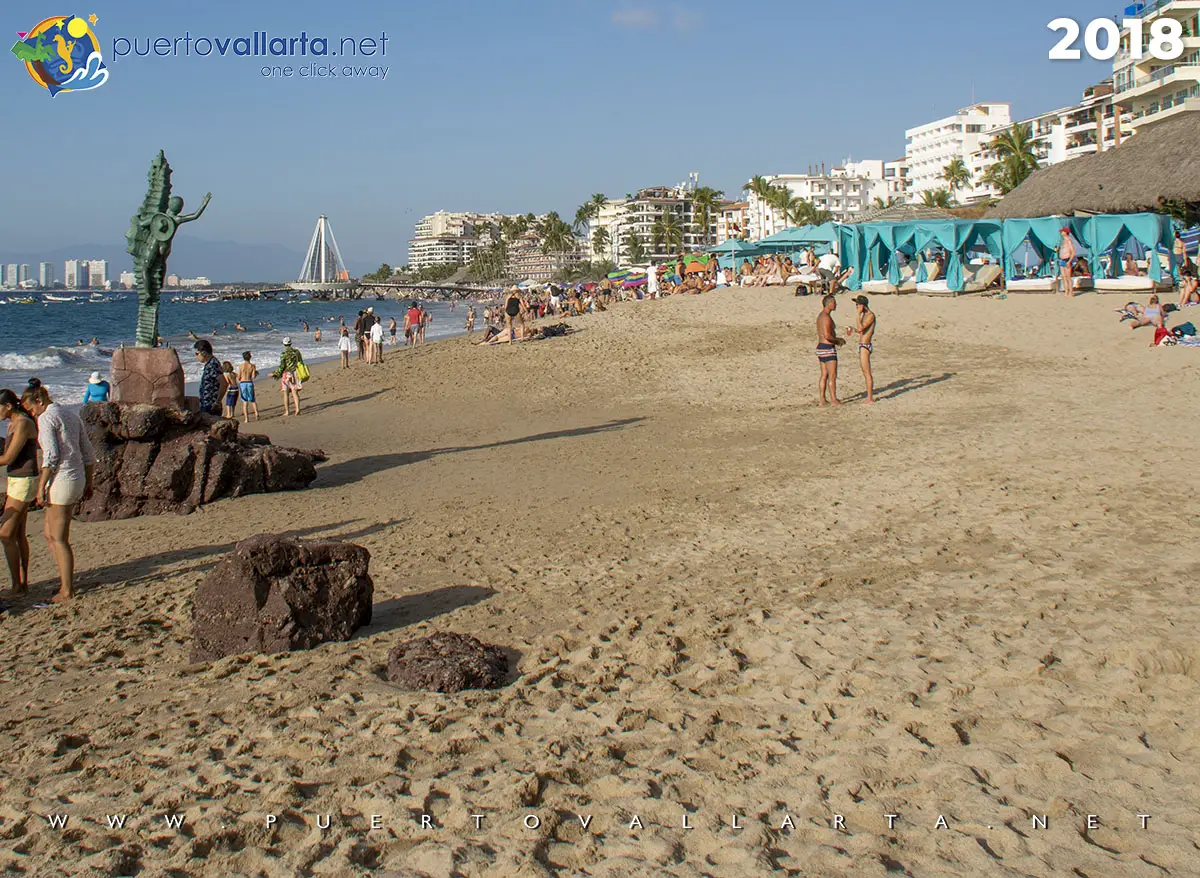
If you look at the older photo the one from 1972 (the before/after photo further above) or the one from 1958, you’ll notice just how much it’s changed with time. Sometimes lots of rocks, sometimes (as in the most recent photos) almost completely covered in sand.
Beaches evolve in time, they are not static geographical features, strong storms can strip beaches of most of their sand and calm times can replenish and expand them. Luckily it’s not covered the seahorse yet. 🙂
Where is it?
As mentioned, it’s at the southern end of Los Muertos Beach, right before El Púlpito and by the staircase that leads down from Santa Bárbara street.
FAQ

Book tours & support us
- Best prices
- 100% Local Support
- 2 decades+ of experience in Puerto Vallarta
Puerto Vallarta news, tips & content
- New info every two weeks
- Free content, news, videos
- Unsubscribe at any time
Contact us via WhatsApp
- Talk with our reservations expert
- Real local and human support
- Book tours, hotels, transfers, and more.
Share this article, choose your favorite option!