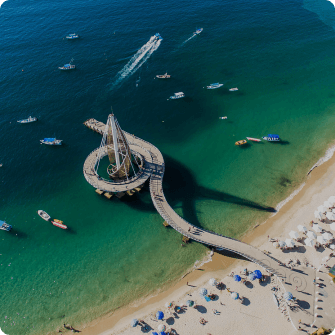
Papantla Flyers Ritual on the Puerto Vallarta Malecon/Boardwalk
Summary
- The Papantla Birdmen is a pre-Hispanic ceremony that originated in the state of Veracruz, Mexico, and was performed by the Totonac people to honor their gods.
- The ritual involves five participants: one leader and four flyers. The leader plays a flute and a drum on top of a 30-meter-high pole, while the flyers descend to the ground by spinning around the pole with ropes tied to their ankles.
- The ritual was declared an Intangible Cultural Heritage of Humanity by UNESCO in 2009, as a way of preserving and promoting the cultural diversity and creativity of the indigenous peoples.
- The ritual is performed daily on the Malecón (boardwalk) of Puerto Vallarta, as well as in other tourist destinations in Mexico.


Introduction
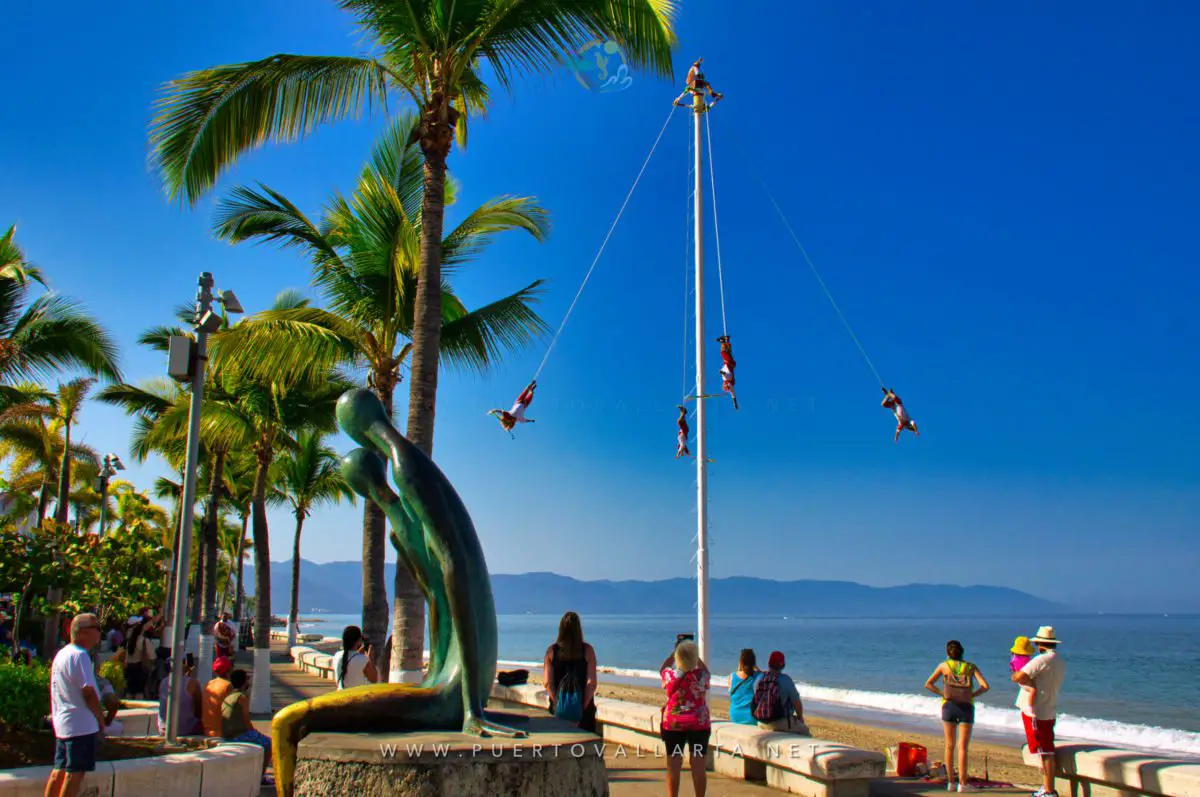
Ritual ceremony of the Voladores/The Ritual Dance of the Flyers (Malecon, Puerto Vallarta)
Each day on the Malecón in downtown Vallarta an impressive and color-filled ritual takes place, the Papantla Flyers (informally known as the Papantla Pole Flyers). Colorful, spectacular, dangerous, but there’s so much more beyond what you can see, there are centuries of tradition, prehispanic Gods. Learn more about this event, considered to be one, if not, the oldest in Mexico.
To fly, the sweet dream for all mortals, is an ancient reality for the Flying Totonac dancers of Papantla, a small town in northern Veracruz, on the Mexican Gulf of Mexico coast. The official name is “La ceremonia ritual de los Voladores” (Ritual ceremony of the Voladores/The Ritual Dance of the Flyers), but you’ll also find them as Danza de los Voladores (Dance of the Flyers) and Palo Volador (Flying pole).
The Tradition
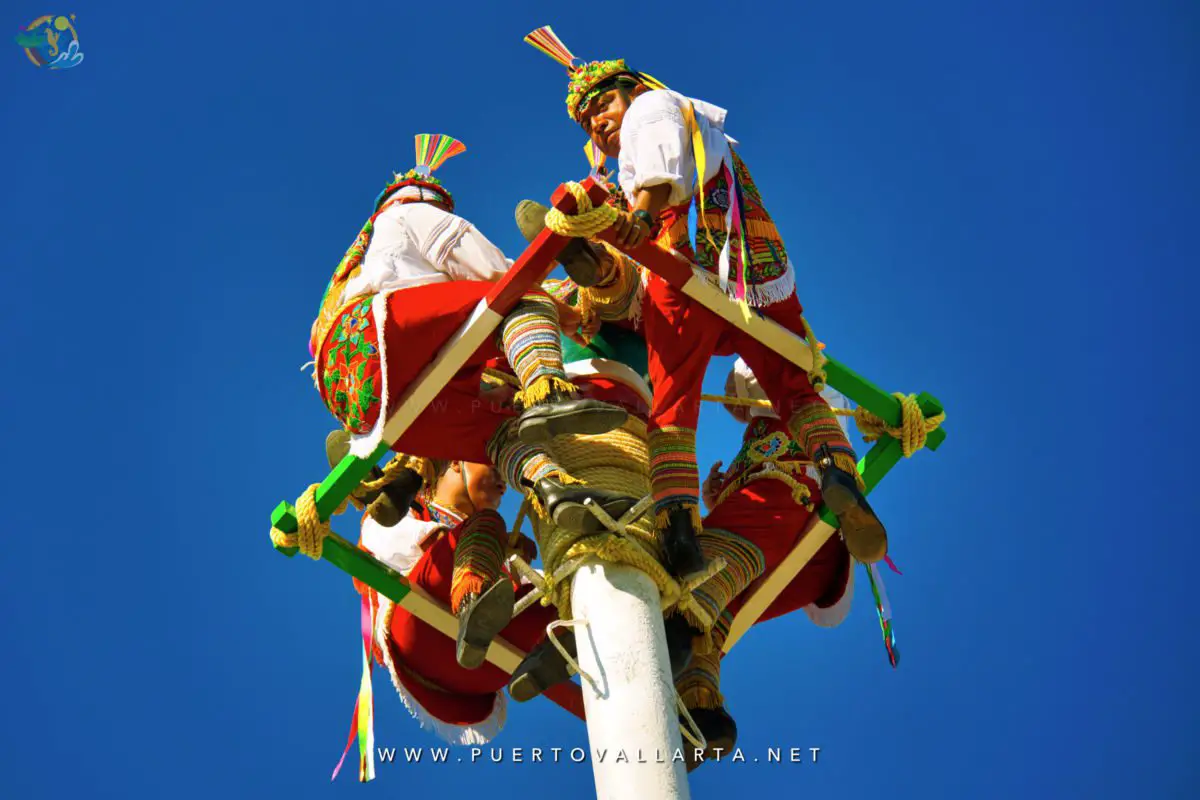
Voladores de Papantla
To be a macaw, an owl, a crow, a butterfly or an eagle is a privilege for the few men who from time immemorial have celebrated their gods in this spectacular dance filled with ancient civilization symbolism, in what some experts consider the most ancient ritual dance in all of Mexico.
The Ritual of the Papantla Flying Men was created with a very specific purpose: to offer their gratitude to Chi’chini (the Sun God), Xipe Totec (God of Spring & Fertility) & to Tlaloc (Rain God). It is much a dance as it is a prayer, a ritual expression of love for the Earth, its bounty, and its natural forces.
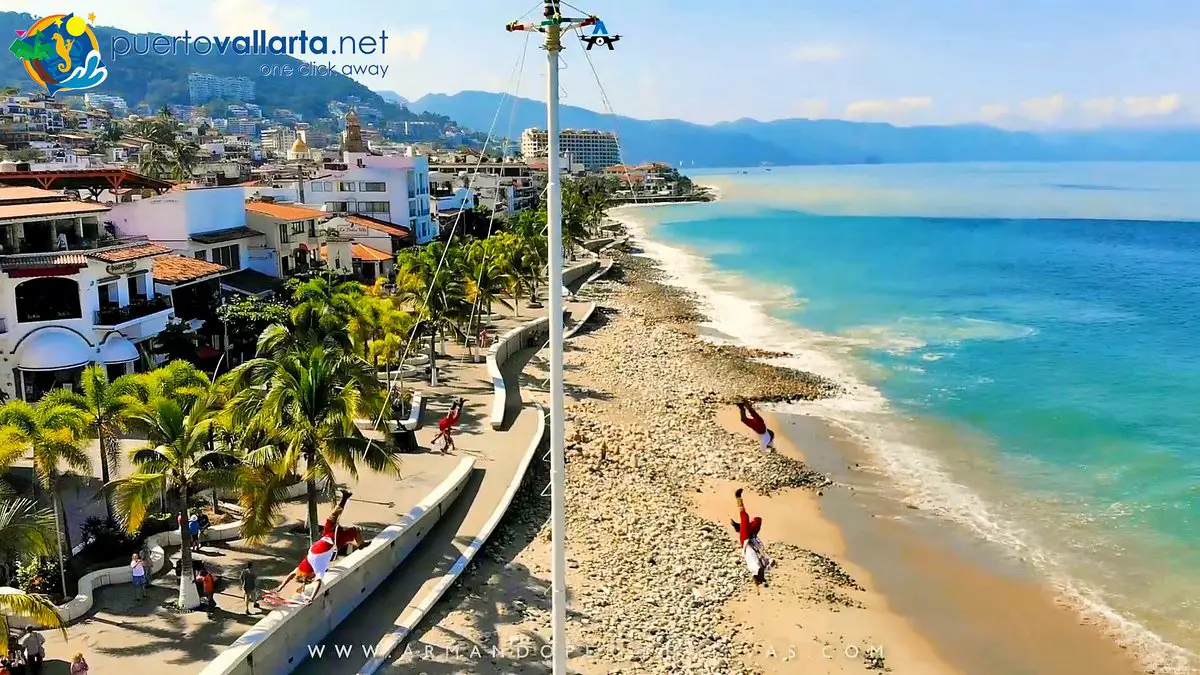
Initially, the ceremony was held during the spring equinox, in the third week of March, but with the arrival of the Spanish conquistadors & missionaries, the natives were forced into a religious compromise, so the dance was transformed and integrated into the Roman Catholic Corpus Christi celebration, held during the first week of June.
The Ritual
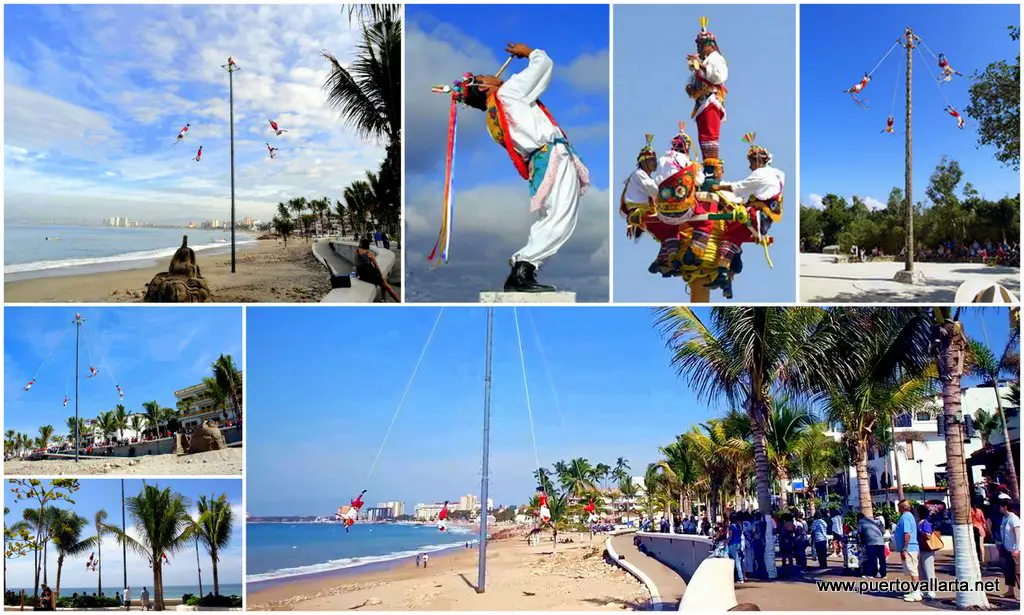
Ritual ceremony of the Voladores/The Ritual Dance of the Flyers (Malecon, Puerto Vallarta)
Ritual preparation begins long before the actual Papantla Bird-Men event, with a ceremony called the planting of the pole. A few days before, the dancers begin to abandon all worldly pleasures, then, with a clean spirit and body, they can begin to search for the ideal tree. Only three native tree species, all of which are currently on the list of threatened species, are considered suitable for this ritual. Two of them are known as flying pole trees and are especially prized as they are very tough, have hardwood, and also because they grow very straight, reaching heights of around 130 ft, all of these are essential qualities if they’re to withstand the weight of the five ritual dancers.
The Papantla Birdmen on the Malecon
As the tree is cut, a high priest, called caporal, plays on his reed flute, or puscol, and his small drum, or litlaqni. This music follows each strike of the ax. During the ceremony, these 2 small instruments represent the Sun God’s voice asking Quihuikolo, Lord of the Mountains, to forgive them for killing one of his children.
Inside the hole dug out in the earth, where the pole will be planted, the priest makes an offering of one black hen, seven eggs, sugar cane firewater, plus a handful of tobacco. He implores the Gods for abundant crops and rich harvest soil and lands. This offer is also made to appease Quihuikolo for the sacrifice of his child, the tree, lest he takes the life of a dancer in revenge.
The Ritual Ceremony of the Flyers (Malecon in Puerto Vallarta)
Before planting the pole, the tree’s bark is removed and the pole is corseted or covered with a rope wrapped tightly around it, with space enough to offer foot and handholds. The upper end of the pole is then prepared by placing an apple and a pixtla, the small wooden base on which the dancers rest their feet while sitting on the frame. The apple is a circle made of wood, it is attached to the top of the pole and is what makes the frame spin. The Caporal, considered the Sun’s priest, will be dancing on top of the pole, sixty feet above the ground. When the pole is planted, the spinning mechanism, or frame, is placed on top, forming a platform that’ll be used by the 4 birdmen on their flight.


Climb up to the sun & then fly, fly
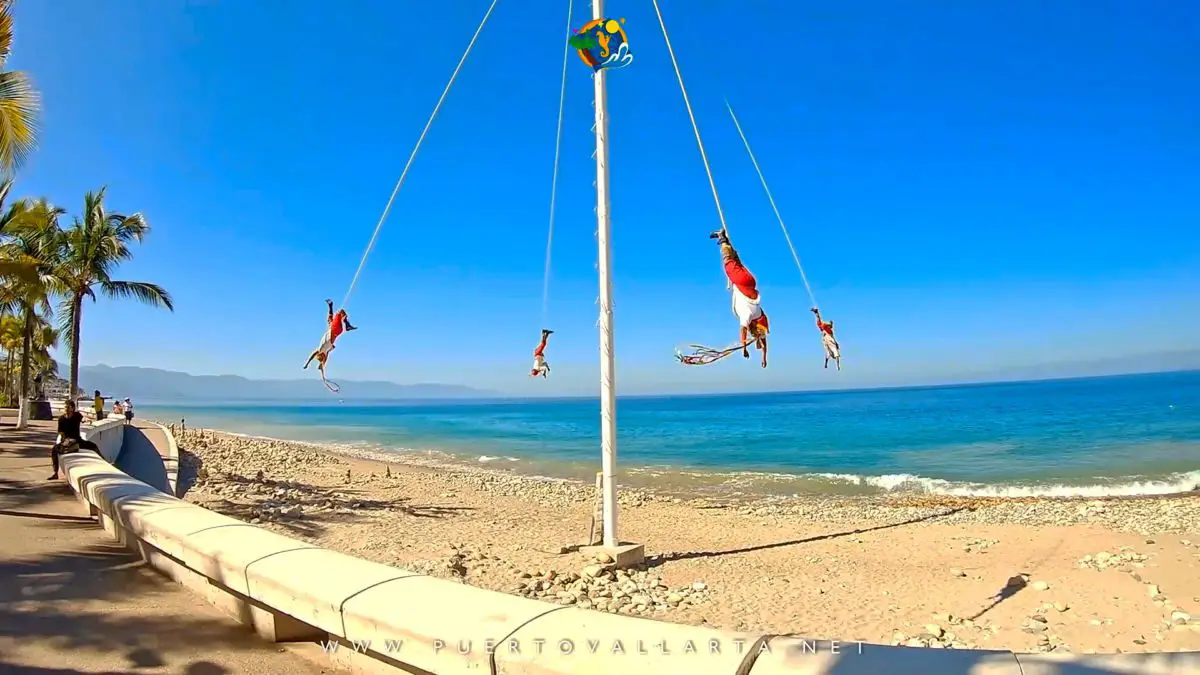
Ritual ceremony of the Papantla Voladores
After some ritual dance blessing their flight, the five Papantla bird dancers, walking in solemn procession, approach and then climb the pole, groping for footing and handles in the narrow folds of rope around the pole. A sense of fear tinged with reverence in the air, an atmosphere of danger, and respect for the ritual that’s being consummated.
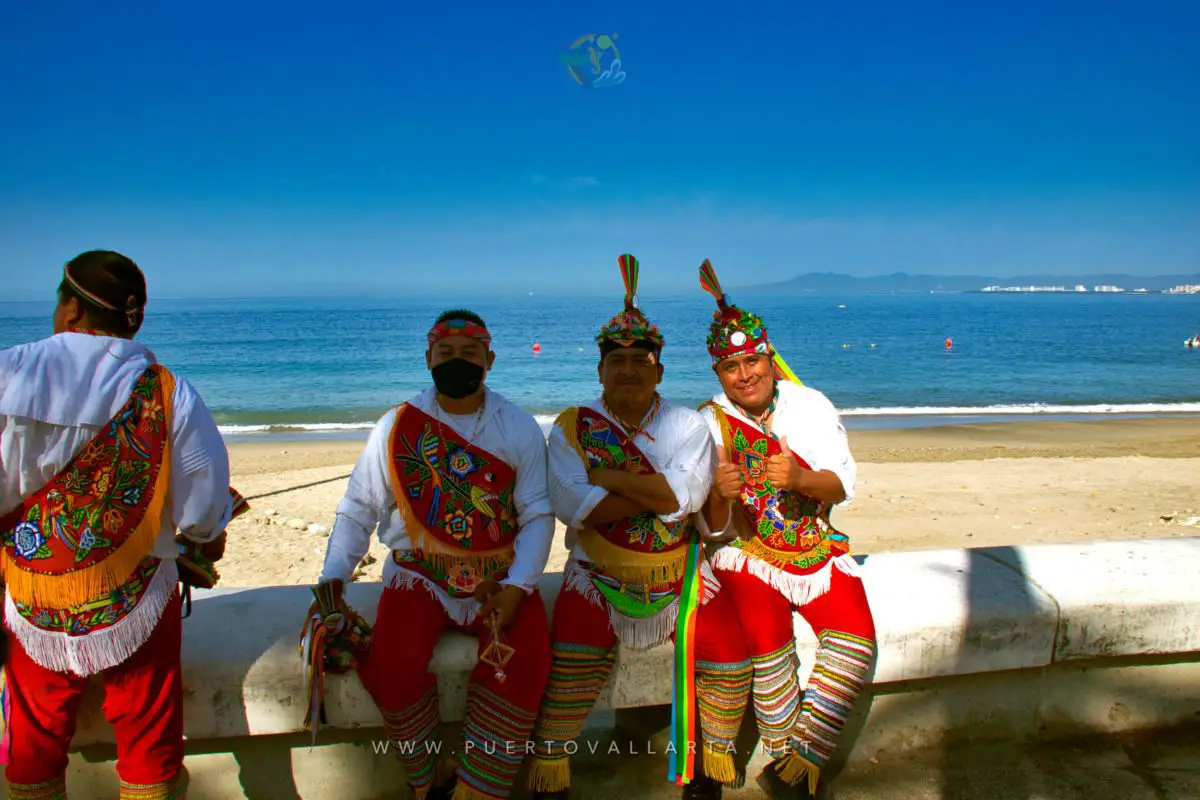
Dancers’ colourful costumes are decorated with intricate and beautiful symbols. Red representing the sun’s heart, the semi-circles on the chest and back are the feathers that in the past covered all the bird-man’s body on their ritual flight, embroidered flowers and plants honour the spring season, small mirrors reflect the sun’s rays, while the bright coloured trailing ribbons evoke rainbows and their glory.
One by one, the dancers climb the pole approaching Chi’chini, the Sun God. When they reach the summit, the Flyers take their positions, the four cardinal points that also represent the four elements. Flute and drum music begins to sound: The Caporal, which stands on the top of the apple is now playing his instruments while performing complicated and dangerous spins in all directions following the Earth’s rotation, which represents the Sun shining down on Earth. His leaps and whirls become frantic and evermore risky, and the pole becomes the mystic center where his spirit and Chi’chini have become one. Almost without us realizing it, the other four men jumped headfirst into the void. Their feet tied to the haunting melody of “Son del Vuelo” (the Flight Song). The Papantla Bird-men arms stretched out on their sides like wings are now rushing and circling through the air.
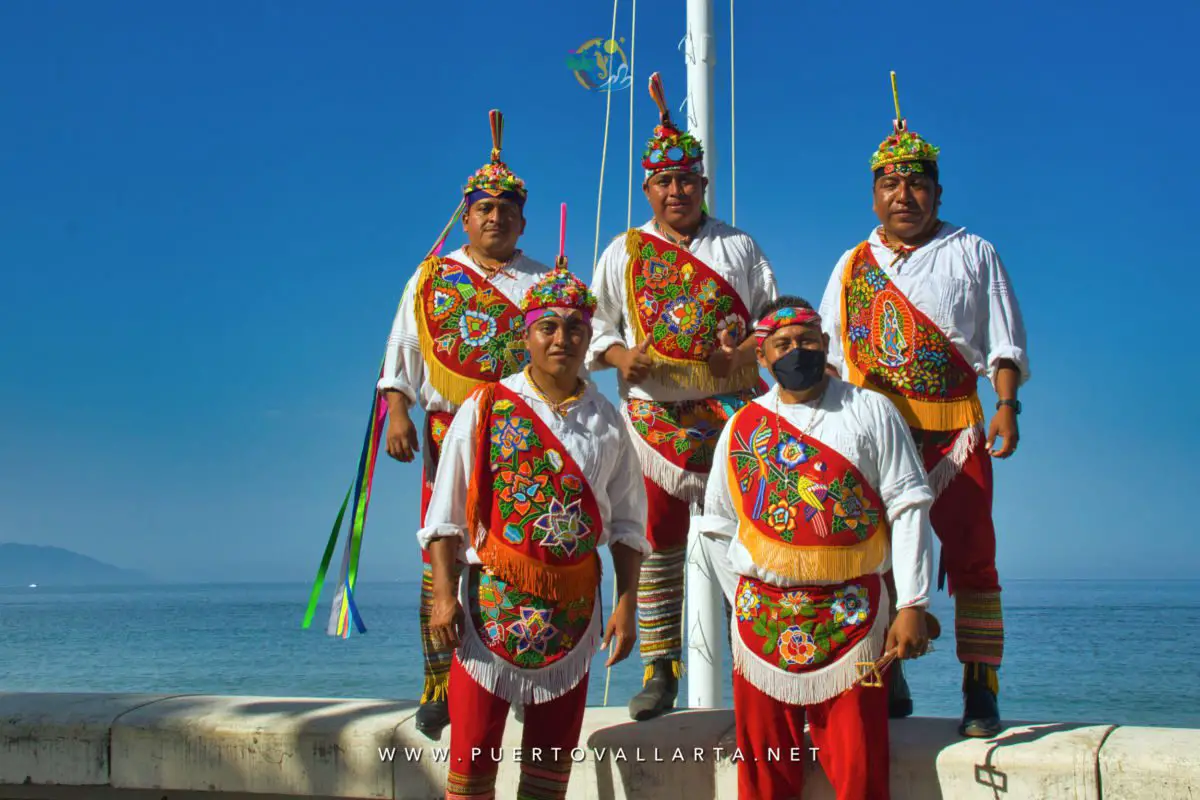
Voladores de Papantla team Dec. 2021, Puerto Vallarta Malecón
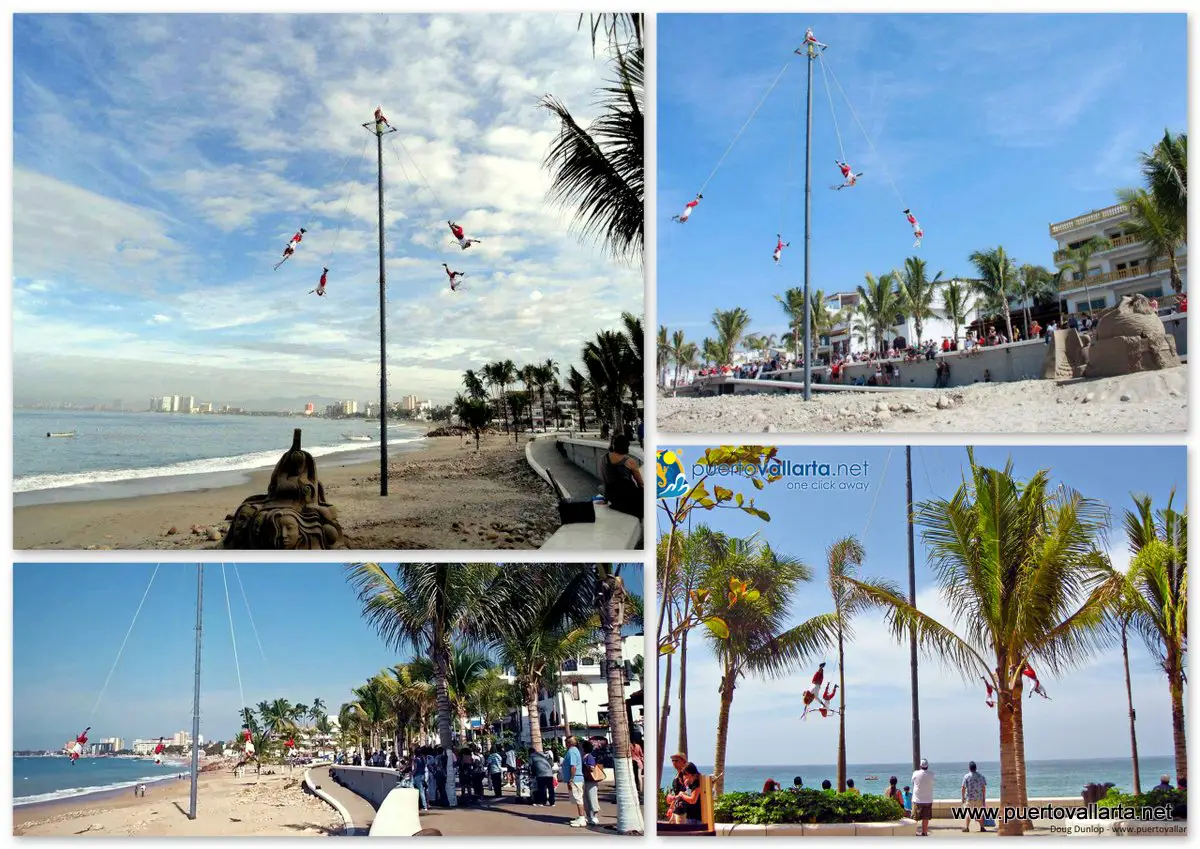
During their flight, they look like birds spinning round and round in honour of the Gods of Sun and Rain. Slow turning them down to Earth, staying in the air only until all of them have spun the magical number of thirteen spins, fifty-two in total, that represents the number of weeks in a year and the years in their prehispanic cosmic cycle. Flyers softly land on their feet, the Caporal climbs down a rope in a firm grip on the ground by one of his companions, his body seems to float as he holds on to the rope only with his arms and abdomen, an act that requires great concentration and also stamina. The bird-men have become mortals once again.
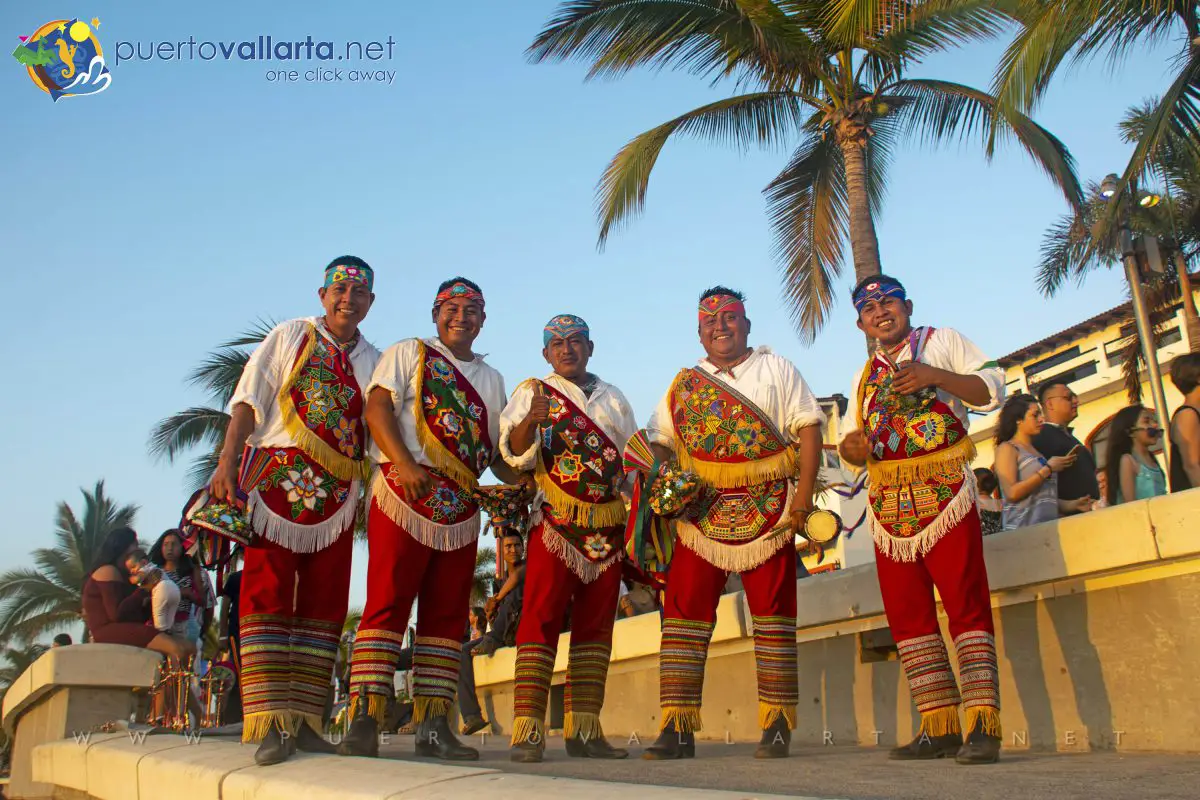
Members of the Papantla Flyers team 2018, Puerto Vallarta Malecon
Very close to the sacred pole, quiet and barely moving in the wind, is the great pinwheel frame in which the men perform huahua, a dance of gratitude and satisfaction that goes hand in hand with the flyers dance. Although not as famous, huahua is exceptionally beautiful and perhaps even more ritualistically intricate than the one before. Dancers wear their glorious Sun headdresses and still guided by the Caporal, slowly move toward the primitive wooden device. Sitting on the wheel with their torsos dangling over the edge, their bodies are the multicoloured pinwheel spokes of the human whirlwind that’s driven by their own weight.
This is their way of giving thanks that the ritual is completed without incidents. But first and foremost, that once again the sacred covenant between men and their gods, between man and the universe has been renewed.
The Ritual Dance of the Flyers in PV
Schedule
Talking to the team and Alex, he informed me of the current Pole Flyer schedule:
Every day of the week, every 15 minutes from:
Monday to Sunday
10 AM to 2:00 PM
and then in the afternoon
6:00PM to 10:30 PM
Papantla Flyers location map (Malecon)
You’ll find them on the Malecon (boardwalk) between Leona Vicario & Pípila street.
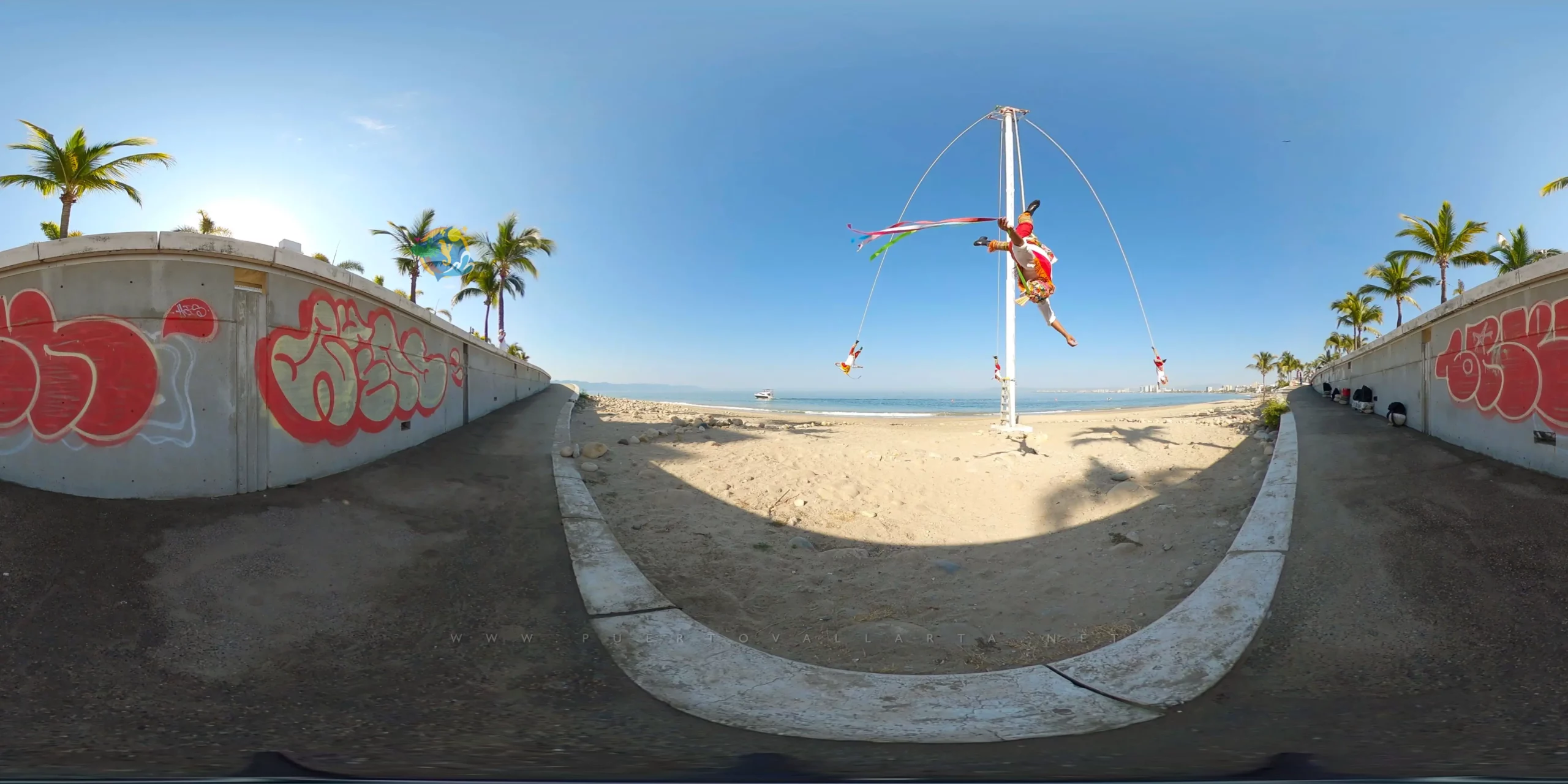
Papantla Flyers 360° Panoramic Photo
FAQ
- What is the safest part of Puerto Vallarta to stay in?
The Marina and the Romantic Zone are considered some of the safest areas to stay in Puerto Vallarta. Both areas are popular among tourists and offer a variety of accommodations, restaurants, and attractions. The Marina is known for its upscale atmosphere, luxury resorts, and high-end shops and restaurants. It has a very secure, controlled environment with 24/7 security personnel. The Romantic Zone offers a more authentic Mexican experience with cobblestone streets, colorful colonial buildings, and a vibrant mix of galleries, cafes, and bars. As a central tourist area, it also has a strong police presence and is considered very safe.
- Where do locals go in Puerto Vallarta?
Locals in Puerto Vallarta enjoy spending time at the city’s beautiful beaches, scenic parks, and lively local markets. Popular beach spots include Playa de Oro, Playa Las Animas, and Playa Camarones for their soft sand and calm waters. Many locals visit the Vallarta Botanical Gardens to enjoy the lush vegetation and hiking trails. They also frequent authentic local food venues like Birrieria las 3 Regiones taco stand, cafes like Cafecito Vallarta, and neighborhood bars like La Cerveceria Union. The downtown Lazaro Cardenas market is a favorite for produce, spices, crafts.
- Is Downtown Puerto Vallarta nice?
Yes, downtown Puerto Vallarta is an exceptionally nice and popular area, celebrated for its vibrant mix of historic Mexican charm and a lively beach town atmosphere. It features a picturesque historic center with cobblestone streets, colorful buildings, and the iconic Parish of Our Lady of Guadalupe church. The downtown seamlessly blends into the scenic Malecón, a beautiful oceanfront boardwalk lined with fascinating sculptures, shops, and restaurants, making it perfect for strolling and enjoying the stunning ocean views.
The area offers an excellent variety of dining, from upscale restaurants to authentic street food, along with fantastic shopping in boutiques and art galleries. Adjacent to the main center is the popular Zona Romántica (Romantic Zone), known for its trendy vibe and energetic nightlife. The entire downtown is considered safe and is very walkable, allowing visitors to easily explore its captivating blend of culture, cuisine, and coastal beauty on foot.
Tip: For an unforgettable experience, head down to the Malecón or any beachfront spot about 30 minutes before the scheduled sundown to watch the spectacular sunset over the bay.
- What is considered old town in Puerto Vallarta?
Old Town, also known as the Romantic Zone or Zona Romántica, is considered the historic heart of Puerto Vallarta. It is characterized by its picturesque cobblestone streets, classic whitewashed buildings, red-tiled roofs, and a lively mix of shops, galleries, restaurants and bars. Nestled between the Sierra Madre mountains and Banderas Bay, Old Town has a traditional Mexican village charm with its colonial architecture and slower pace compared to the rest of Puerto Vallarta. Its romantic ambience comes from the area’s natural beauty, outdoor cafes, and charming boutique hotels. Old Town offers visitors a taste of an authentic Mexican neighborhood.

Book tours & support us
- Best prices
- 100% Local Support
- 2 decades+ of experience in Puerto Vallarta

Puerto Vallarta news, tips & content
- New info every two weeks
- Free content, news, videos
- Unsubscribe at any time

Contact us via WhatsApp
- Talk with our reservations expert
- Real local and human support
- Book tours, hotels, transfers, and more.
Last updated on:
Share this article, choose your favorite option!