Summary
- Coffee is an important part of the Mexican economy, with Mexico being the 9th largest coffee producer in the world.
- The coffee produced in Mexico is known for its high quality and unique flavor profiles, with distinctive and fruity profiles.
- Coffee is a popular and versatile drink that can be enjoyed in different ways, such as black, with milk, with cinnamon, with chocolate, with liquor, or with spices.
- Coffee is a symbol and identity of Mexico, as it reflects its tradition, diversity, and quality, as well as its passion, creativity, and resilience.
By M. Lavin
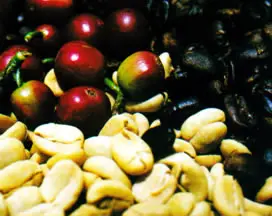
It was all thanks to Kaldi the shepherd, from Egypt. One day in 1440 he saw his goats become truly festive after eating the small fruits from a certain bush. The bush was later named “coffee tree.” The therapeutic properties of its fruit were praised. Asian countries went wild for the beverage which this small fruit produced, once it was dried and ground up.

The beverage soon arrived in Europe. There it was adopted with devotion. In the Seventeenth Century, the first coffee shop opened in London. Coffee shops soon became quite popular in most European cities, where the beverage used to accompany placid encounters and conversations.
Juan Antonio García later brought it from Cuba to Mexico, through the port of Veracruz. Finally, in the Nineteenth Century, it arrived in Chiapas by the hand of the Italian Geronimo Mancinelli, who planted it in the region known as Soconusco (in the southernmost part of the state which borders with Guatemala). There, for over a century, coffee growing has been the main economic activity.

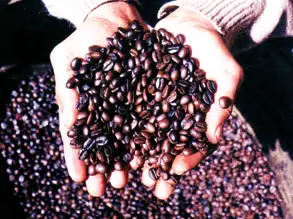
Since then, Mexico has been an important coffee producer worldwide. Among the other Mexican coffee-growing states (Veracruz, Oaxaca, Puebla), it is still Chiapas that is the most important. The mountains and the altitude there are ideal for the growth of the coffee tree. There the fruits of the coffee tree are nurtured under the shade of the paterna and the chalum. Hard-toiling families who live in this hidden mountain land harvest it by hand.
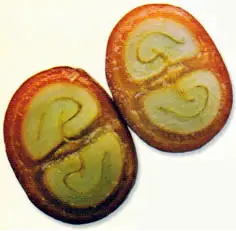
In Chiapas, the tradition planted at the beginning of last century by the coffee chimera still endures. Immigrants from Germany, France, Italy, Spain, the United States, arrived and established themselves as owners of coffee plantations. Chinese, Jamaican, and Japanese immigrants came along as workers. Some great fortunes were made. Others suffered enormous misfortunes.
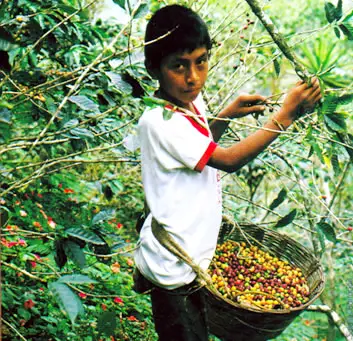
The interests surrounding coffee conspired to create prodigious dreams that are still evident in splendorous plantations; plantations sustained by hard work, and with a mysticism that present times do not easily allow.
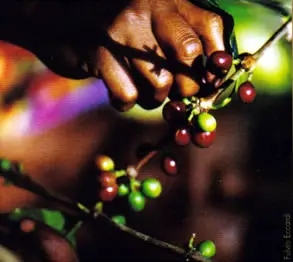
Indigenous organizations or traditional plantations are currently in charge of part of the coffee production. Such is the Finca Irlanda (Ireland Plantation), which since the 1960s has grown a high-quality organic coffee that was pioneered here.
Coffee continues to be a completely handcrafted product, whose production summons many hands and sensibilities. Currently, The Coffee Route is being promoted in that region. For instance, a trip through the old Soconusco plantations (in what was once known as New Germany) allows visitors to see coffee plantations and landscapes, as well as coffee production processes while learning the history of the beverage.
Delights of Drinking Coffee
We Mexicans, now major coffee bean exporters, drink coffee our own way. Our custom involves spending the afternoon at the Café, or coffee shop. Immigrants to Mexico (especially the Spaniards) influenced the development of Mexico’s coffee-drinking customs.
The port of Veracruz offers one of the most notable examples of what it is to sit, drink and enjoy a cup of coffee. This port city offers wonderful opportunities to experience coffee with both the spirit and the palate.
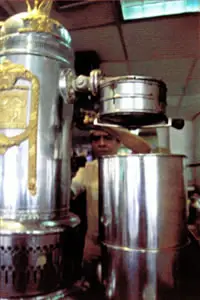
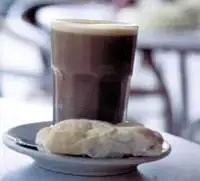
The famous Café de la Parroquia -that was once in Los Portales (The Archways), in the port’s central square, and that today stands in the seafront walkway- allows one to enjoy the environment of a traditional seaport city while drinking a lechero, the place’s most typical coffee.
At certain times in the afternoon, and until the dawn breaks, the demand for a table here is such that sometimes people have to spend a long time standing, awaiting the moment in which one becomes available. In La Parroquia one sits down to drink coffee without a care in the world.
The custom here is to tap the milk glass with a metal spoon so that the waiter (who carries two enormous pots) comes to the table and pours from one of them the essence of coffee, and from the other the steaming milk, each according to the proportion required by the customer.
Drinking coffee is not only warming to the spirit with its aroma and taste, but it also involves pausing and looking around. Coffee is drunk slowly. You ask for more than one cup and converse, as the good habit of our mixed heritage dictates.
Coffee has a taste that is only sampled in this land. Here, brown sugar and cinnamon (and in some cases also an orange rind) are added to make the typical café de olla, which is served in clay pots. These little pots or jarritos are ideal for keeping the liquid hot, because of their narrow mouths and big bellies.
A jarrito can also be embraced by the hands to warm them. Perfect for cold nights or early mornings. The walls of old Mexican kitchens (especially those in Puebla) are covered with these little clay pots in which coffee is served.
It is a Mexican custom (especially in the countryside) to drink a sweetened coffee. For the peasant, it is a wake-up beverage that connects him to the sunrise. Often it is accompanied by a concha or an oreja (those traditional sugar bread that we Mexicans so enjoy) before going out to work the fields.
The beverage is manually prepared in a clay pot. Once the water boils, the ground coffee is added and left to sit before it is strained, preferably with a piece of cloth. At mid-morning, a plentiful and delicious brunch follows.
Drinking coffee is not only warming to the spirit with its aroma and taste, but it also involves pausing and looking around. Coffee is drunk slowly. You ask for more than one cup and converse, as the good habit of our mixed heritage dictates.
Coffee has a taste that is only sampled in this land. Here, brown sugar and cinnamon (and in some cases also an orange rind) are added to make the typical café de olla, which is served in clay pots. These little pots or jarritos are ideal for keeping the liquid hot, because of their narrow mouths and big bellies.
A jarrito can also be embraced by the hands to warm them. Perfect for cold nights or early mornings. The walls of old Mexican kitchens (especially those in Puebla) are covered with these little clay pots in which coffee is served.
It is a Mexican custom (especially in the countryside) to drink a sweetened coffee. For the peasant, it is a wake-up beverage that connects him to the sunrise. Often it is accompanied by a concha or an oreja (those traditional sugar bread that we Mexicans so enjoy) before going out to work the fields.
The beverage is manually prepared in a clay pot. Once the water boils, the ground coffee is added and left to sit before it is strained, preferably with a piece of cloth. At mid-morning, a plentiful and delicious brunch follows.
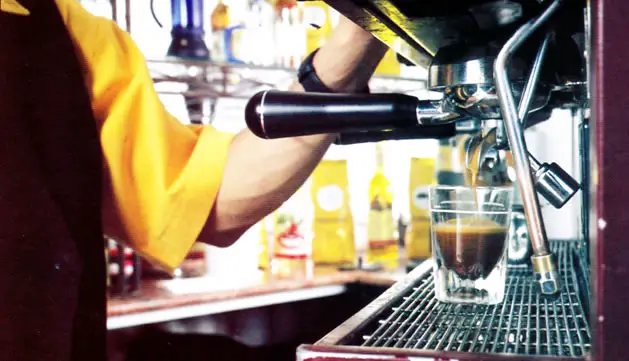
Drinking coffee -café de olla, coffee with milk or lechero, milk or water for coffee (as they say when all that’s available is instant coffee), or any of the various European coffee drinking modalities- is a very rooted tradition in Mexico. With each sip, coffee evokes the wild landscapes of the Chiapas, Veracruz, Oaxaca, or Puebla highlands. Here, every year the flower of the coffee tree sheds its whiteness to give way to its “cherry”, which will later give its red essence to the coffee bean, that incomparable accomplice of secrets and solitary contemplation.
Yes, drinking coffee is rubbing elbows with an old and pleasant history.
FAQ

Book tours & support us
- Best prices
- 100% Local Support
- 2 decades+ of experience in Puerto Vallarta
Puerto Vallarta news, tips & content
- New info every two weeks
- Free content, news, videos
- Unsubscribe at any time

Contact us via WhatsApp
- Talk with our reservations expert
- Real local and human support
- Book tours, hotels, transfers, and more.
Last updated on:
Share this article, choose your favorite option!