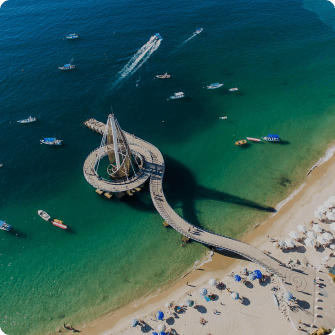
Introduction
Puerto Vallarta (population 291,839 – 2020 census) is located on the Pacific coast in the Mexican State of Jalisco, within the Banderas Bay (Bahía de Banderas), which is considered to be one of the most beautiful bays in the world and happens to also be one of Mexico’s largest, measuring 26 miles (42 km) from east to west and 20 miles (32 km) from north to south. [Vallarta Map] [Map showing cities close to PV] [Map showing Mexico & USA]

Puerto Vallarta Coat of Arms
Puerto Vallarta details
- City founded on Dec. 12, 1851
- Population 291,839 (2020 census)
- Area (Municipality): 1,300.7 km2 (502.19 sq. miles)
- 7 m (23 ft) over sea level
More data
- Location: Bahía de Banderas (Banderas Bay), Jalisco State, Mexico
- Longitude/Latitude: 20°37’19” N/105°13’42” W
- Over 5 million in 2019 pre-COVID, more than 6 million in 2022.
- 2nd most important tourist beach destination in Mexico


General Information
The cheapest time to visit Puerto Vallarta is during the rainy summer season from June to October, when there are fewer tourists and hotels offer discounts.
- Read Magical Puerto Vallarta for a fan point-of-view of PV
- Puerto Vallarta is an authentic Mexican destination
- A list of awards the city has received
- About security and crime in the city
- Coat of arms of Puerto Vallarta
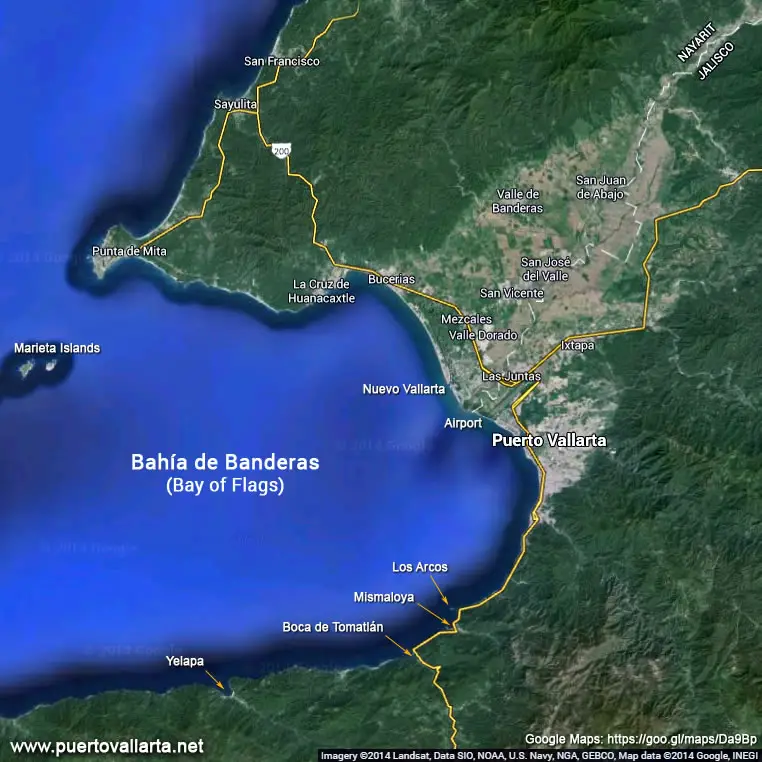
Puerto Vallarta & Banderas Bay
The northern limit of the bay is Punta de Mita which is also considered the end of the Sierra de Vallejo mountains, and in its southern limit, the bay ends at Cabo Corrientes, the end of the Sierra del Cuale mountain range.
Puerto Vallarta is the second-most visited tourist destination in Mexico (only Cancun has more tourists), attracting millions of visiting tourists per year (4.1 million in 2016 and 4.5 million in 2017, without including cruise ship visitors, and up to over 5 million in 2019, pre-pandemic and over 6 million post-pandemic), and has served as a relaxing change and refuge for people looking for a place that is more than beautiful beaches.

Downtown Puerto Vallarta
PV is a reliable retirement location too, that’s why it was voted the best place to retire in the world by the American Association of Retired Persons in 2010, read more.
This may be the reason why there is a considerable number of expatriates, mostly from the U.S.A., Canada, and some European citizens living permanently in the city. Another attractive feature is Vallarta’s great weather.
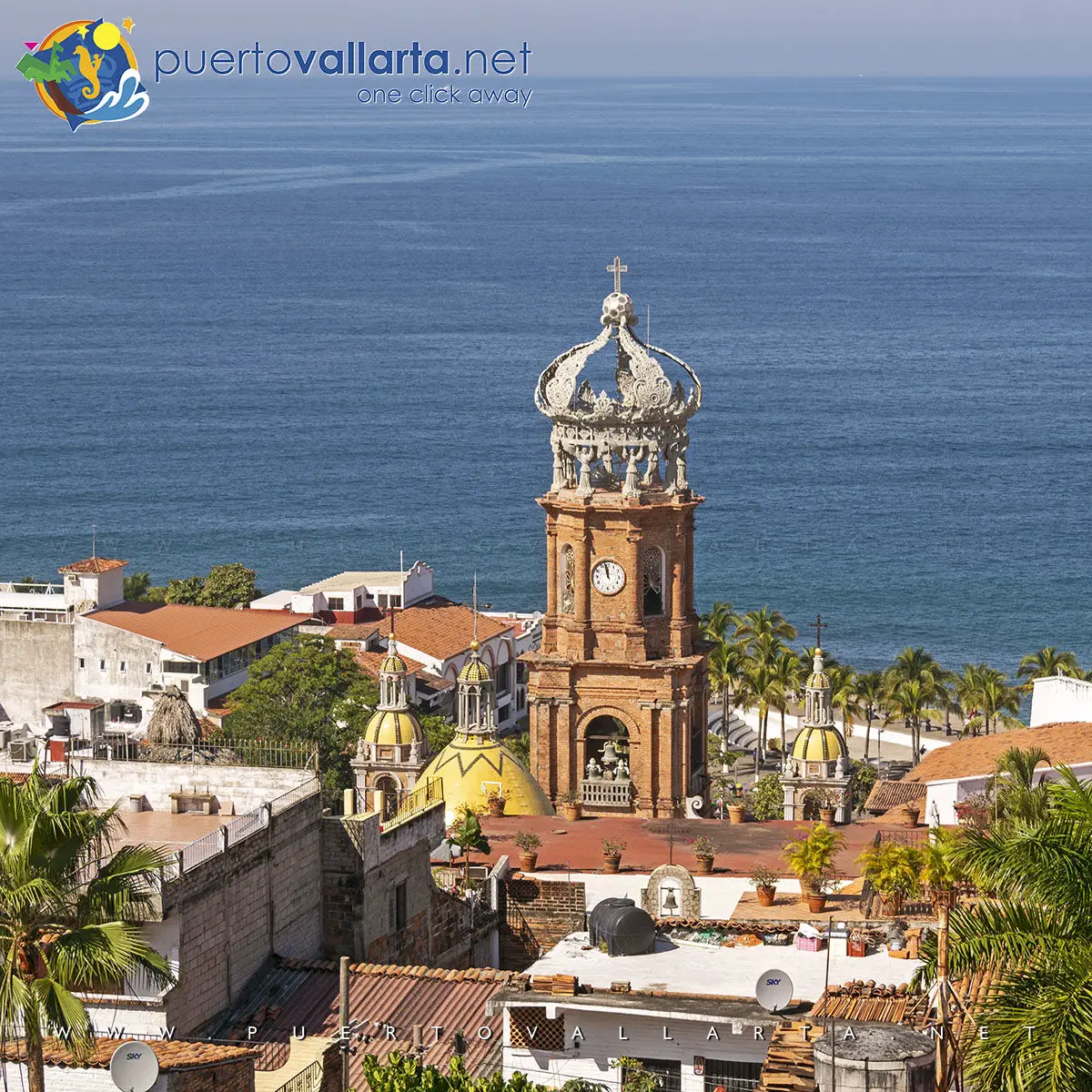
Parish of Our Lady of Guadalupe from Luna Liquida Boutique Hotel, Downtown Puerto Vallarta
The Setting
Tropical-forested mountains and mineral-rich volcanic slopes appear to literally rise from the sea, and 100 miles of mountain-ringed golden coastline hug the stunningly beautiful Banderas Bay.
Bahía de Banderas is the broadest and deepest natural bay in Mexico. The bay teems with aquatic life and multiple species of dolphins, whales, manta rays, and fish of all types and colors that visitors could enjoy and even touch if they snorkel or scuba dive in the area.
Read more about Puerto Vallarta’s Biodiversity
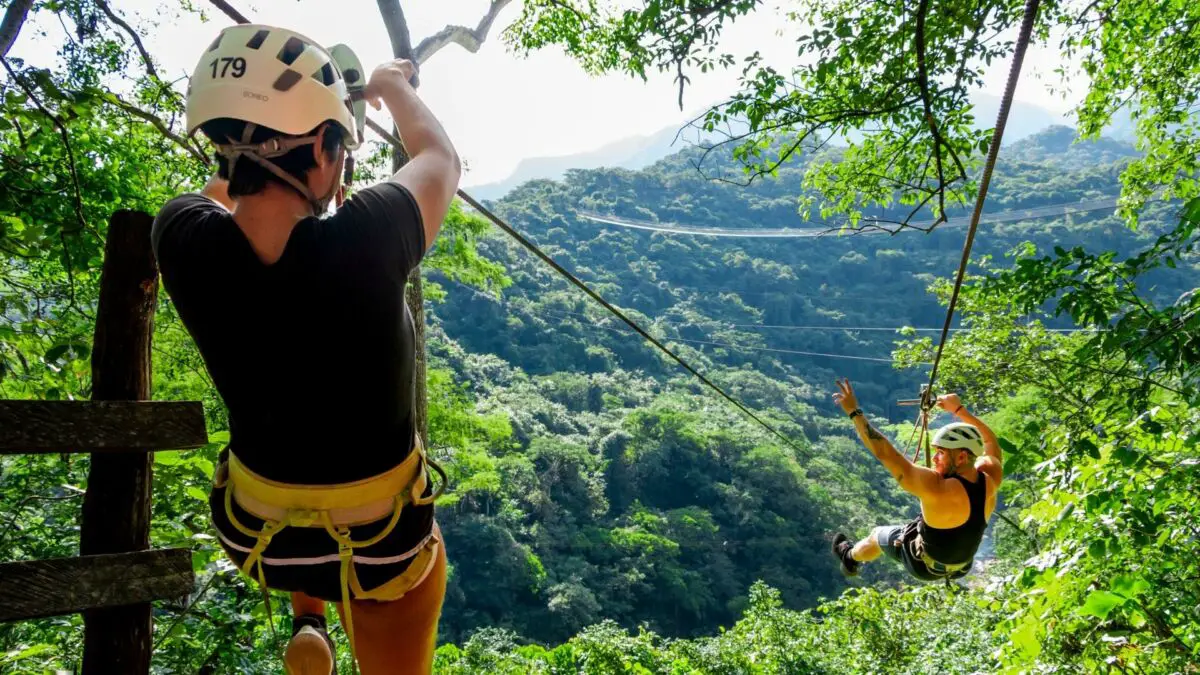
Canopy River Tour in Puerto Vallarta
The Bay & Towns
The bay and PV offers a cornucopia of amazing options to enjoy during your visit – not only beaches but also sparkling sunshine and clear warm emerald blue waters that are ideal for snorkeling, scuba diving, and swimming.
Use our webcam for views of the Bay and Puerto Vallarta.
Sleepy fishing villages that emulate Vallarta of old times – Punta Mita, Sayulita, La Cruz de Huanacaxtle, Bucerías, Mismaloya, Boca de Tomatlán, and Yelapa are part of the scenery along the coastline both to the north and to the south of PV. Even though Vallarta no longer is a small town, you can travel back in time when visiting these locations.
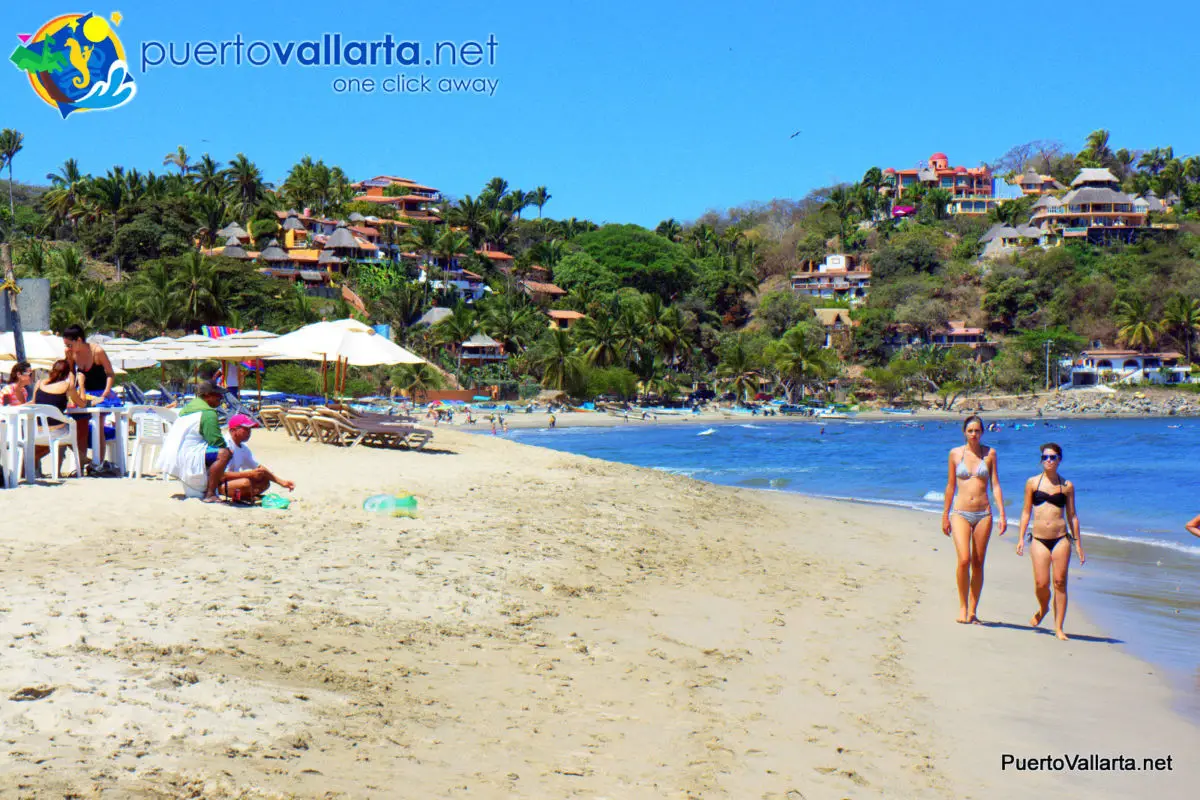
Sayulita Beach, Jalisco, Mexico
Nestled in verdant valleys and green lush mountains overlooking the bay, you can find many idyllic colonial-era villages such as San Sebastián del Oeste, Mascota, Talpa and others, that invite travelers to enjoy yet another facet of Puerto Vallarta, Jalisco, and Mexico.
The inherent warmth and friendliness of the locals have attracted a growing and active expatriate community from the U.S.A., Canada, and countries in Europe. These, in turn, make foreign vacationers feel right at home [Friendship club].
Keeping up with the changing times, the city has adapted and improved with time, so now the needs of the demanding modern-day tourist are met, these include luxury resorts and hotels, all-inclusive options, spas and retreats, championship golf courses, top-notch shops, and gourmet restaurants have opened at a rapid pace in recent years.
Downtown Puerto Vallarta
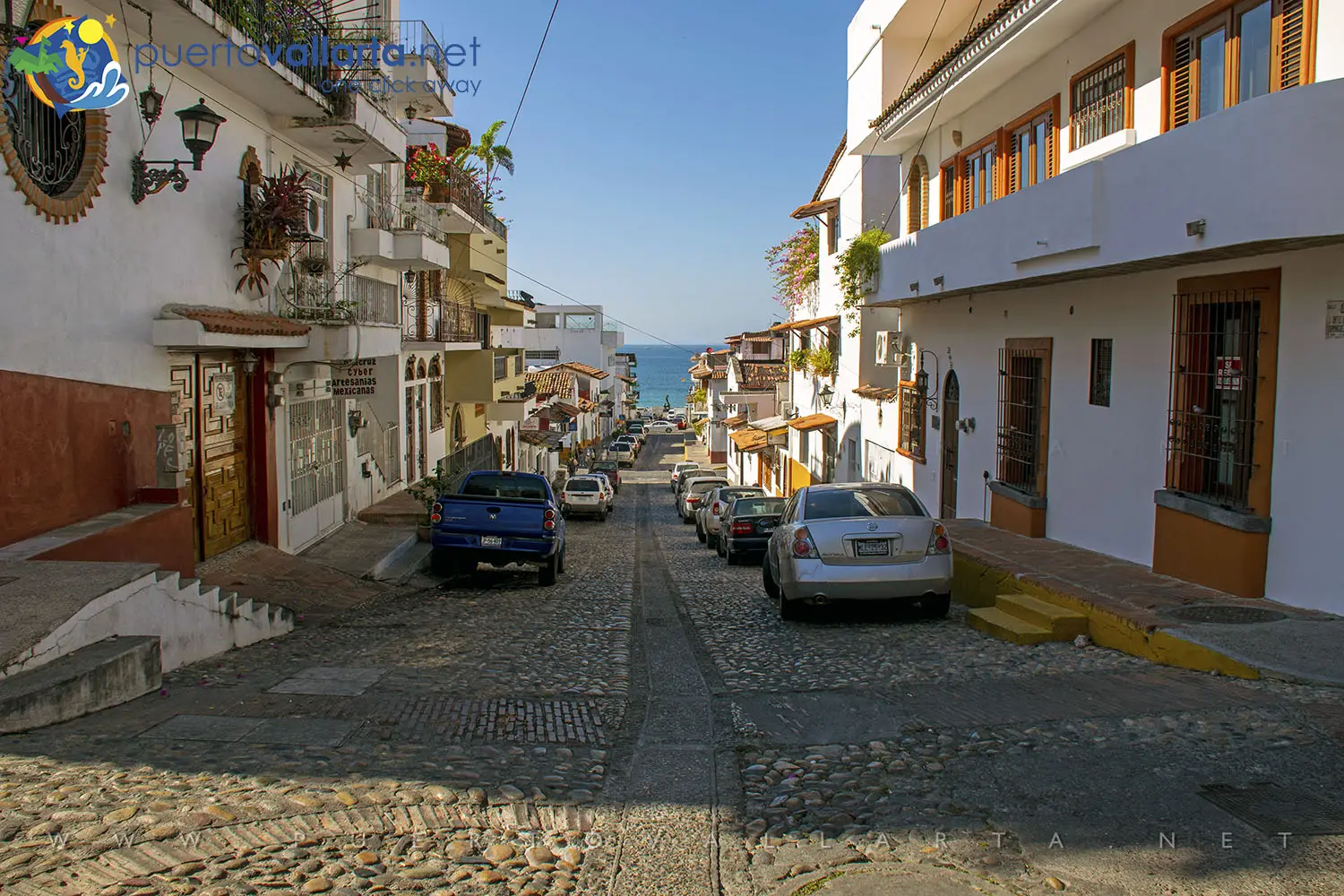
Josefa Ortiz de Domínguez Street in Downtown Puerto Vallarta
Despite the change, the town still maintains pockets of its quaint charm. In downtown Vallarta, you’ll find the picturesque colonial and whitewashed buildings, cobblestone streets, red Spanish tile roofs, and a lot of lush vegetation, both on the streets, the gardens, and parks, help make PV a totally different experience when comparing it to any other destination in Mexico and around the world. The architecture mirrors the colonial facades with brickwork and flowering plants.
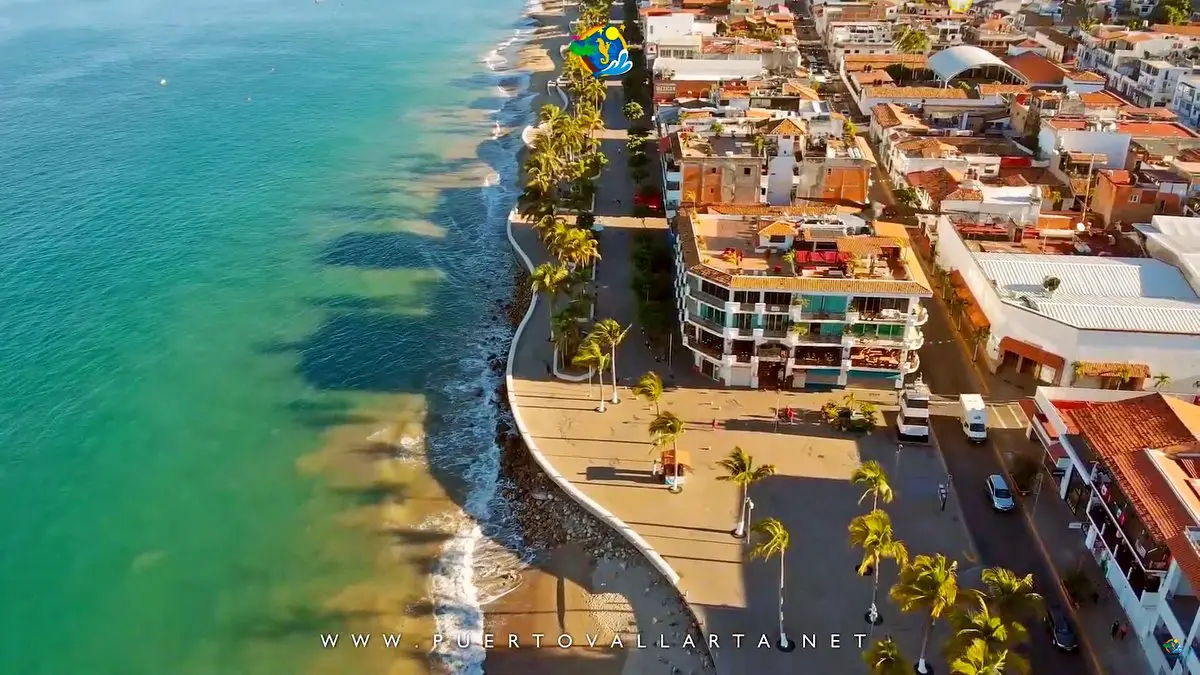
Malecon & Galeana Street, Downtown Puerto Vallarta
The beauty and charm of Puerto Vallarta are, as always, represented by the landmark Our Lady of Guadalupe Parish. The first building started at the end of the XIX century, after many starts and stops, changes and even a war, the main building was finished in 1952 with the current red brick tower (without the crown).
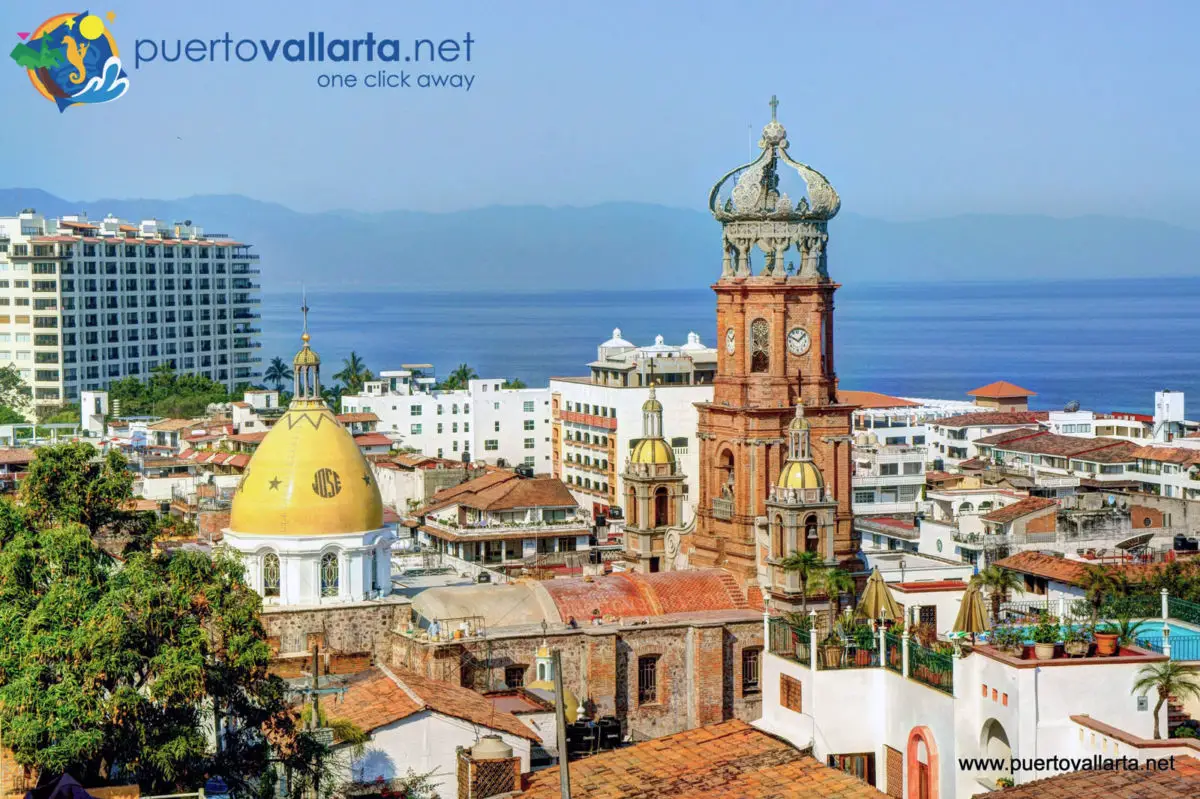
Parish of Our Lady of Guadalupe, downtown Puerto Vallarta
It is located a block from the picturesque main plaza. The church’s red-brick bell tower was topped with a crown designed by the priest Rafael Parra Castillo who also designed the tower that holds it. The cross and sphere on top of the crown were designed by another artist, Esteban Ávalos Haro.
Growing Popularity
The Top 10 Beaches in and around Puerto Vallarta
Hundreds of flights per week arrive at Puerto Vallarta’s International Airport (PVR) from airports throughout the U.S.A., Canada, and Mexico. A total of 2,591,035 passengers made their way through the gates of Aeropuerto Internacional Licenciado Gustavo Díaz Ordaz during 2013. Since then Vallarta CVB’s data reported a total of 4.7 million people visited the city in 2017 not even counting the cruise ship visitors. This record was surmounted in 2019 with over 5 million visitors. New reports from 2023 report an all-time record of 6.8 million visitors arrived to our city through Puerto Vallarta’s International Airport. So these numbers don’t lie, PV is on an upward trend. Consider visiting the city and finding out for yourself why this trend is a reality.
As you all know these last years have been unusually tough on tourist destinations. 2022 and 2023 have shown things getting back to normal and going beyond and to new heights, so that’s been great! We hope to have you visiting us as soon now that it is, once again, safe for you and your family.
FAQ
Frequently asked questions
The 2020 Mexican census (INEGI) counted 291,839 people in the municipality of Puerto Vallarta, which includes the city and the surrounding rural areas. The urban area itself had 224,166 residents, and the wider metropolitan area, which includes Bahía de Banderas in Nayarit, had 479,471. In high season the number of people in town climbs further with visitors and winter residents.
Spanish is the language of Puerto Vallarta, but you'll find English widely spoken in hotels, restaurants, tour companies and shops in the tourist areas. A few words of Spanish, like por favor and gracias, go a long way and are always appreciated, especially in neighborhoods away from the Malecón.
Yes. Mexico's Pacific coast is seismically active, and people in Puerto Vallarta do feel tremors from time to time, most of them small. The strongest recorded quake in the region was a magnitude 8.1 in June 1932, and a magnitude 8.0 struck the Colima and Jalisco coast offshore in October 1995. Buildings are subject to Mexican construction codes. If you feel shaking, follow local guidance and the posted evacuation routes.
It depends on your trip. The Romantic Zone suits people who want to walk to restaurants and nightlife. The Hotel Zone and Marina Vallarta offer bigger resorts and quieter beaches. Nuevo Vallarta has long beaches and all inclusive resorts, but beach access is harder there: only a few public paths reach the sand, and otherwise you need to be staying at a resort. In downtown Puerto Vallarta and the Romantic Zone, nearly every street leads to the beach. Conchas Chinas and the south shore are quieter, with views, and further south it gets even quieter, surrounded by the Sierra Madre jungle.
Locals enjoy the Malecón in the evening, Sunday family time at the beaches, and the markets. For food, look for crowds around a street stand: it will likely be a popular, tasty local taco stand worth checking out.

Book tours & support us
- Best prices
- 100% Local Support
- 2 decades+ of experience in Puerto Vallarta
Puerto Vallarta news, tips & content
- New info every two weeks
- Free content, news, videos
- Unsubscribe at any time
Contact us via WhatsApp
- Talk with our reservations expert
- Real local and human support
- Book tours, hotels, transfers, and more.
Last updated on:
Share this article, choose your favorite option!